
So what exactly are cow ears for dogs? They’re basically just what they sound like – dried-out cow earflaps that have been cleaned and processed (dehydrated) into chews.
But how do they compare to other types of dog chews? And more importantly, are there any benefits or risks associated with giving them to your pup? Let’s take a closer look at everything you need to know about cow ears for dogs.
What Are Cow Ears for Dogs?
Cow ears for dogs are exactly what they sound like – dehydrated cow ears that have been made for pups to chew on. They’re a popular chew toy choice for many dog owners because they’re safe, natural, and durable. Plus, they can also help keep your dog’s teeth clean.
Here are just a few of the benefits that they offer:
- They’re a natural and healthy chew toy (as long as you buy them from a reputable brand with a transparent ingredient list)
- Cow ears for dogs are a great alternative to plastic or rubber chew toys, which can contain harmful chemicals
- They help keep your dog’s teeth clean since chewing on a cow ear helps to remove plaque and tartar from your dog’s teeth

🏆 Our Top Pick
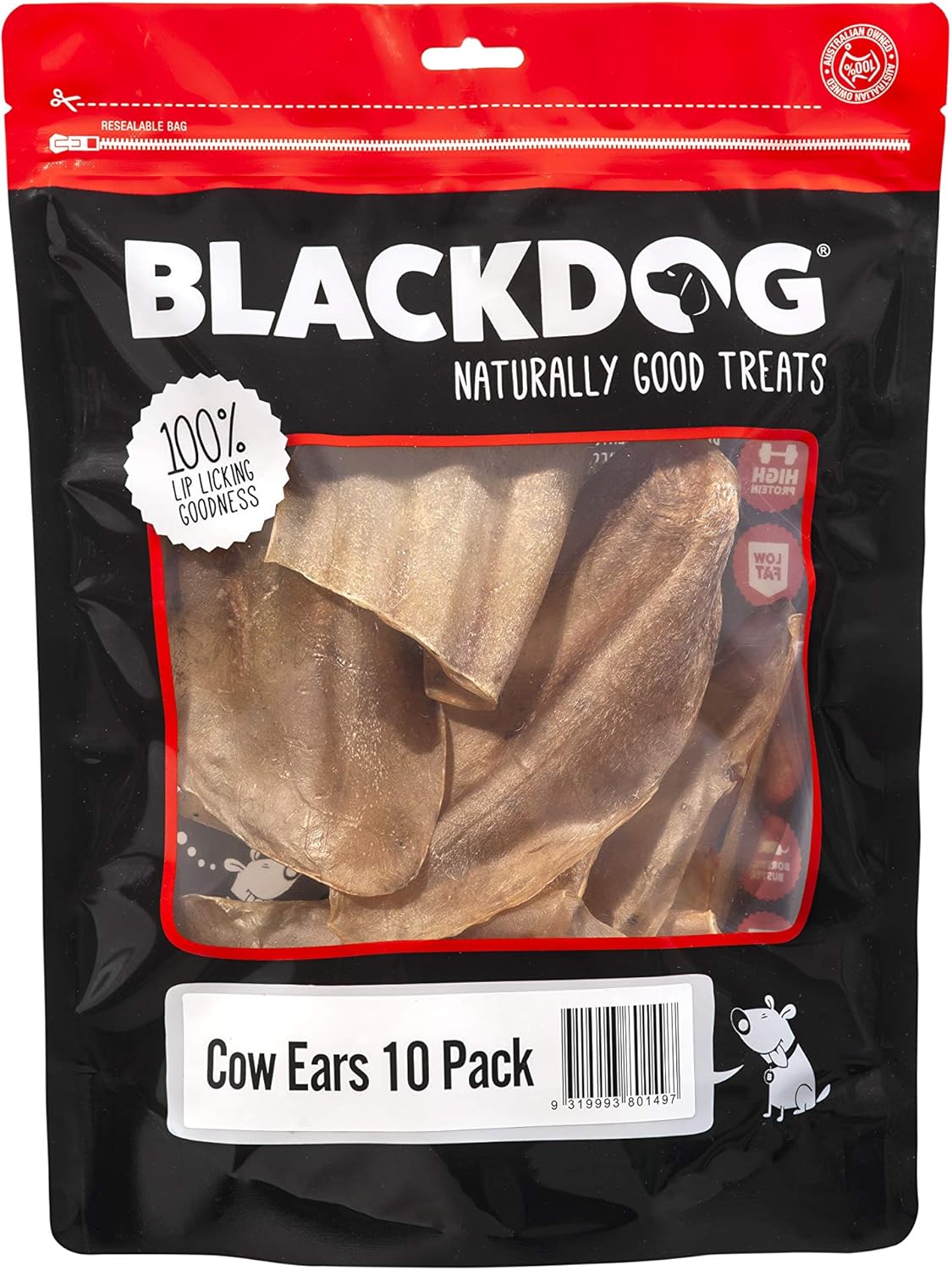
Blackdog Cow Ears (10 Pack)
Premium Australian cow ears from a trusted brand. 100% natural, single-ingredient chews with no artificial additives. Lower in fat than pig ears, making them ideal for dogs watching their weight while still enjoying a satisfying, long-lasting chew.
When Cow Ears Are the Right Choice
🏋️ Overweight Dogs
Lower in fat than pig ears, making them a better option for dogs who need to watch their weight while still enjoying a satisfying chew.
🦷 Dental Health Focus
The natural chewing action helps remove plaque and tartar buildup, promoting better dental hygiene between professional cleanings.
🧠 Mental Stimulation
Perfect for keeping dogs occupied and mentally engaged, especially helpful for anxious dogs or during crate training.
🌿 Natural Alternative Seekers
For owners who want to avoid plastic or rubber toys that may contain chemicals, cow ears offer a 100% natural chewing option.
How to Choose the Right Cow Ear For Your Dog
Not all cow ears are created equal. When you’re shopping for a cow ear for your dog, there are a few things you’ll want to keep in mind to ensure you’re choosing the best possible option.
🛒 Choosing the Right Cow Ear
1. Check the Ingredients
- Look for 100% natural ingredients with no additives
- Avoid cow ears treated with chemicals
- Skip products that have been dyed or bleached
- Choose brands with transparent sourcing
2. Choose the Right Size
- Match the size to your dog’s breed and jaw strength
- Smaller dogs: Look for smaller or split cow ears
- Larger dogs: Full-sized ears provide longer-lasting enjoyment
- Always supervise to ensure proper size match
3. Safety Check
- Inspect for sharp edges before giving to your dog
- Ensure the ear is properly dehydrated (not too brittle)
- Check for any unusual odours or discoloration
- Buy from Australian brands with quality standards
How Do They Compare to Other Types of Dog Chews?
So, how do cow ears for dogs stack up against the competition?
For starters, it’s important to know that all dogs are different and will therefore have different preferences when it comes to chews. That being said, there are certain qualities that make cow ears an appealing option for many pups.
For one, they’re a natural product. That means they’re free of any artificial ingredients, flavours, or chemicals (as long as you buy them from a reputable brand with a transparent ingredients list).
Additionally, cow ears are a good source of protein – which is essential for your dog’s diet. They’re also relatively low in fat, making them a healthier option than some other types of chews, such as pig ears.
Finally, many dogs simply enjoy the taste and texture of cow ears. They’re often a favourite among pups who like to chew on things for long periods of time.
Cow Ears vs Pig Ears: Cow ears are generally lower in fat than pig ears, making them a better choice for dogs watching their weight. However, pig ears tend to be softer and may be preferred by some dogs, especially puppies.

Are There Any Risks Associated With Feeding Your Dog Cow Ears?
While cow ears may be a tasty treat for your pup, there are some potential risks to consider.
Cow ears can be a choking hazard
First, cow ears can be a choking hazard because of their tough texture and large size. It is important to supervise your dog while they are consuming cow ears and, if possible, break them into smaller pieces before feeding them to your dog.
They can cause digestive upset in some dogs
Additionally, cow ears can also cause digestive upset in some dogs, leading to vomiting or diarrhoea. As with any new treat or food, it is recommended to introduce cow ears in small amounts and monitor your dog for any adverse reactions.
Overall, cow ears can be a tasty snack for your dog but it is important to use caution and monitor your pup for any potential risks.
💡 Pro Tips for Cow Ears
- Always supervise: Never leave your dog unattended while chewing on a cow ear, especially aggressive chewers who might try to swallow large pieces.
- Start slow: Introduce cow ears gradually to avoid digestive upset. Start with 10-15 minutes of chewing and work up from there.
- Size matters: Choose appropriately sized cow ears – too small poses choking risks, too large may be frustrating for smaller dogs.
- Frequency guidelines: Treat cow ears as an occasional reward (1-2 times per week) rather than a daily staple to maintain their special appeal.
- Store properly: Keep cow ears in a cool, dry place. Discard any that develop mold, unusual odours, or become overly brittle.
- Know when to remove: Take the cow ear away when it becomes small enough to swallow whole to prevent choking hazards.
References
Applied Animal Behaviour Science: Chewing behaviour in dogs – A survey-based exploratory study. https://www.sciencedirect.com/science/article/pii/S0168159121001593