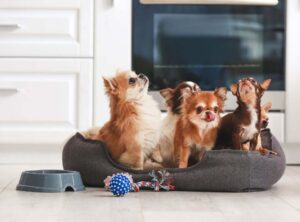

Toy Cavoodles are the smallest variety of an already-popular breed — and they come with some specific characteristics worth understanding before you commit. If you’re deciding between a Toy and a Miniature Cavoodle, or just want to know what makes the Toy variety distinct, here’s an honest breakdown.
📋 In This Guide
- What Is a Toy Cavoodle? — size, weight, and how they differ from Miniature Cavoodles
- Size, Coat & Appearance — what to expect
- Temperament — personality traits specific to the Toy variety
- Toy Cavoodle Specific Considerations — what changes at this size
- Care & Grooming — what they need day to day
- FAQs
What Is a Toy Cavoodle?
A Toy Cavoodle is a Cavalier King Charles Spaniel crossed with a Toy Poodle — as opposed to a Miniature Cavoodle, which uses a Miniature Poodle. The Poodle size is the key variable: Toy Poodles are smaller than Miniature Poodles, which is why Toy Cavoodles are consistently smaller than their Miniature counterparts. The breed was first developed in Australia in the 1990s.
💡 Toy vs Miniature Cavoodle at a Glance
| Toy Cavoodle | Miniature Cavoodle | |
|---|---|---|
| Poodle parent | Toy Poodle | Miniature Poodle |
| Weight | 2.5–7kg | 6–10kg |
| Height | Up to ~35cm | Up to ~40cm |
| Best for | Apartments, smaller homes, less mobile owners | Families with children, more active households |
| Robustness | More fragile — needs gentle handling | Sturdier — better with young children |
| Exercise needs | Lower — shorter walks are sufficient | Moderate — standard daily walks |
Size, Coat & Appearance
Toy Cavoodles typically weigh between 2.5 and 7kg and stand up to around 35cm tall — though there’s natural variation within that range. Their coat is soft and can be wavy or curly depending on which parent’s genetics dominate, and comes in a range of colours including black, white, apricot, gold, and red. Many have a multi-colour or parti-colour coat.
Because they’re so small, Toy Cavoodles are often mistaken for puppies even as adults — which is part of their appeal in Australian cities where they’ve become particularly popular. They’re compact enough for apartment living without any compromise on personality.

Tilly the Toy Cavoodle from Brisbane — @tilly_the_tiny_cavoodle
Temperament
Toy Cavoodles inherit the same core temperament as the broader Cavoodle breed — friendly, affectionate, intelligent, and people-oriented. Both the Cavalier and the Toy Poodle are companion breeds, which means Toy Cavoodles are strongly attachment-driven. They want to be with their people, are sensitive to household mood, and don’t do well with long periods of isolation.
They’re highly trainable — the Poodle intelligence comes through clearly — and respond well to positive reinforcement. For first-time dog owners, this makes them genuinely manageable. They’re also social with other dogs and typically gentle with strangers.
📌 What to Know About Toy Cavoodle Temperament
Strong Attachment to Their Person
Toy Cavoodles form deep bonds and will follow you from room to room. This is endearing but also means separation anxiety is a genuine consideration — more so than with many other breeds. Building alone time tolerance from puppyhood is important.
Sensitive to Rough Handling
At this size, Toy Cavoodles need gentle, respectful handling. They’re not well suited to households with very young children who haven’t yet learned how to interact with small dogs — their small frames are more vulnerable to accidental injury than Miniature Cavoodles.
Alert but Not Yappy
They’ll let you know when someone’s at the door, but Toy Cavoodles aren’t typically excessive barkers — provided they’re well exercised and mentally stimulated. Boredom and anxiety are the most common triggers for problem barking at this size.
Toy Cavoodle Specific Considerations
Being at the smaller end of the Cavoodle range brings a few practical differences worth knowing about before you commit.
✅ What Changes at Toy Size
Fragility
- Toy Cavoodles are more physically fragile than Miniature Cavoodles — their small bones are easier to injure from jumping or rough play
- Stairs or a ramp for couch and bed access are strongly recommended to reduce jump impact on their joints
- They’re better suited to households without very young children, or where children have been taught gentle interaction
Cold Sensitivity
- Very small dogs lose body heat faster than larger dogs — Toy Cavoodles can feel the cold more acutely, particularly overnight in winter or in air-conditioned environments
- A dog coat or jumper for cold walks is practical rather than just decorative at this size
- Make sure their sleeping spot is warm and draft-free
Exercise Scale
- Their exercise needs are proportional to their size — shorter walks are genuinely sufficient
- Two 15–20 minute walks daily is appropriate for most Toy Cavoodles
- Mental stimulation matters just as much as physical exercise at this size — puzzle feeders and training sessions keep their Poodle brain engaged
- Over-exercising puppies under 12 months can cause joint issues — keep puppy walks short
Hypoglycaemia Risk in Puppies
- Very small breed puppies can be prone to low blood sugar (hypoglycaemia), particularly in the first few months
- Signs include lethargy, shakiness, or disorientation — if you see these, contact your vet immediately
- Feeding small meals frequently throughout the day (rather than one or two large meals) significantly reduces this risk
- Your breeder and vet can give you specific guidance for the first weeks home
Care & Grooming
Toy Cavoodles have moderate grooming needs — their coats keep growing and don’t self-regulate the way double-coated breeds do. Regular brushing and professional grooming are part of ownership rather than optional extras.
💡 Toy Cavoodle Grooming Routine
- Brush several times a week — daily if possible, particularly behind the ears, under the legs, and around the collar where matting happens fastest
- Professional groom every 6–8 weeks — their coats keep growing and need clipping regularly
- A coat conditioning spray helps significantly with knot removal between grooms — Tilly’s owner swears by one, covered in detail in What Tilly Barks About
- Check ears regularly — floppy ears reduce airflow and Cavoodles are prone to ear infections; clean after swimming or bathing
- Omega oils in their diet support coat health and reduce shedding

Tilly in her handmade harness from Wil and Essie — @tilly_the_tiny_cavoodle
❓ Toy Cavoodle FAQs
What is the difference between a Toy and Miniature Cavoodle?
The difference comes from the Poodle parent used in the breeding. Toy Cavoodles are bred from a Toy Poodle — they typically weigh 2.5–7kg and stand up to ~35cm. Miniature Cavoodles are bred from a Miniature Poodle and are slightly larger at 6–10kg and up to ~40cm. Miniature Cavoodles are generally more robust and better suited to families with young children. Toy Cavoodles are better for apartments, smaller homes, and owners who prefer a very compact dog.
Are Toy Cavoodles good for apartments?
Yes — Toy Cavoodles are one of the better breeds for apartment living. Their compact size, moderate exercise needs, and adaptable temperament suit smaller spaces well. The main requirements are daily walks, mental stimulation, and not leaving them alone for long stretches. See our full guide on Cavoodles in apartments for more detail.
Are Toy Cavoodles good with children?
They’re gentle and patient, but their small size makes them more physically vulnerable than Miniature Cavoodles. They’re better suited to households with older children who understand gentle interaction. For families with toddlers or very young children, a Miniature Cavoodle is generally a more robust choice. Read more in our guide on whether Cavoodles are good family dogs.
How much does a Toy Cavoodle cost in Australia?
Toy Cavoodles from reputable breeders in Australia typically range from $3,500–$7,000+. Their popularity and small size make them among the more expensive Cavoodle varieties. Be cautious of unusually cheap puppies — responsible breeders health test parent dogs for Mitral Valve Disease (MVD) and other inherited conditions, which adds to the cost but significantly improves the odds of a healthy dog.
How long do Toy Cavoodles live?
Toy Cavoodles typically live 12–15 years. Smaller dogs generally live slightly longer than larger dogs, so Toy Cavoodles may trend toward the higher end of that range. As with all Cavoodles, choosing a breeder who health tests for Cavalier-inherited conditions is the single biggest factor in long-term health outcomes.
Do Toy Cavoodles shed?
Toy Cavoodles are low-shedding — one of the main reasons the breed is so popular. The degree varies by generation and individual genetics: F1b Toy Cavoodles (backcrossed with a Toy Poodle) have the curliest, lowest-shedding coats. While no dog is truly hypoallergenic, many allergy sufferers find Toy Cavoodles well tolerated.
Is a Toy Cavoodle Right for You?
Toy Cavoodles are a genuinely excellent choice for the right owner — apartment dwellers, people who want a very compact companion dog, and those who don’t need a breed that can keep up with intense outdoor activity. The key things to go in aware of are their fragility at this size, their strong need for companionship, and their grooming requirements. Get those right and you’ll have a loyal, characterful dog that fits almost any living situation.