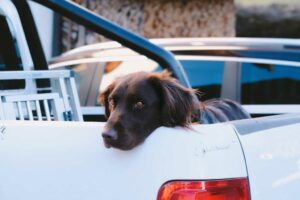

If you’re a Staffordshire Bull Terrier owner, you know how important it is to have the right collar for your dog. Staffies are strong and energetic dogs that require a collar that can withstand their pulling and tugging — and given the shape of their neck relative to their head, fitting a collar correctly matters more for this breed than most.
In this guide, we’ll walk you through everything you need to know about choosing the right collar for your Staffy, from the different types available to how to size one correctly and when a harness might serve you better.
Our Top Picks

🏆 Our Top Pick
Excellent Elite Spanker Tactical Collar with Handle
Heavy duty and built for strong dogs — this collar is made from 1000D nylon with soft padded lining to prevent chafing on your Staffy’s skin. The built-in handle is genuinely useful for moments when you need quick control, and the hardware is robust enough to handle serious pulling without buckling under pressure.
From $37.29

ALSO GREAT
Carhartt Dog Collar
Ultra-durable with reflective triple-needle stitching — built for working conditions but good-looking enough for everyday use. Solid hardware and a clean design that holds up to Staffy-level pulling over the long haul.
From $32.05
Why Collar Choice Matters for Staffies
Staffies have a distinctive physical build that makes collar choice more consequential than it is for most breeds. Their muscular neck is often as wide as — or wider than — their head, which means a collar that’s too loose has a real chance of slipping forward over the skull and coming off entirely. A collar that’s too tight causes discomfort and can cause skin irritation on their short, sensitive coat.
⚠️ The Dangers of a Poorly Fitting Collar
- Too loose: Can slip over the head — a real risk with the Staffy’s neck-to-head proportions. This is how dogs get away from you at the worst possible moment.
- Too tight: Causes chafing, skin irritation, and discomfort. Short-coated breeds like Staffies are more prone to collar rub than long-coated dogs.
- Weak hardware: Staffies are strong pullers. Cheap buckles and D-rings can fail under sustained pressure — see the personal story below.
- Wrong collar type for a puller: A flat collar on a strong puller concentrates all force on a narrow strip of neck. For dogs that pull hard, a martingale or harness distributes that force more safely.
📖 A Personal Story
Let me tell you a story about the time I nearly lost my mate because of a dodgy collar. We were out for a walk on a reserve, and my Staffy pulled so hard that the buckle gave way, and he bolted into the distance. It was bloody scary, but thankfully we were able to wrangle him back safely. Ever since then, I make sure to choose collars that can handle my dog’s strength and energy — and I always carry a backup slip leash with me now, just in case. Trust me, you don’t want to take any chances with your furry mate’s safety.
Types of Collars for Staffies
Not all collar types suit a Staffy equally well. Here’s what’s worth knowing about each option.
🐾 Collar Types Explained
Flat Collar
The standard collar — a single strip of nylon, leather, or neoprene with a buckle or snap closure. Simple, lightweight, and easy to use for everyday wear and ID tag attachment.
Best for: Staffies with good leash manners who don’t pull hard. Everyday wear and ID tags.
- Choose one with metal hardware — plastic buckles can fail under Staffy-strength pulling
- Neoprene or padded options reduce skin irritation on short coats
- Not ideal for strong pullers — concentrates all force on the neck
Martingale Collar
Features a loop that tightens when the dog pulls but won’t fully constrict — designed to prevent dogs from backing out or slipping forward out of their collar. Particularly well-suited to Staffies given their neck proportions.
Best for: Staffies who are escape artists or tend to slip their collar. Also good for training walks.
- More secure than a flat collar for dogs with wide necks relative to their heads
- Should only tighten to a set limit — never fully constricts
- Not recommended for leaving on unsupervised — remove when home
Tactical / Handle Collar
A heavy-duty flat collar with a built-in grab handle on top. Made from military-grade materials — typically 1000D nylon — with reinforced stitching and robust metal hardware.
Best for: Strong pullers, active dogs, owners who need quick control. Our top pick for Staffies.
- The handle gives you instant control without grabbing scruff or collar ring
- Built to withstand strong, sustained pulling
- Hardware quality is typically much higher than standard flat collars
Leather Collar
A premium, durable option that softens with use and often outlasts nylon equivalents. Good-looking and robust, though requires more maintenance than synthetic options.
Best for: Owners who want something long-lasting and stylish for a well-trained Staffy.
- Genuinely strong when high-quality — look for bridle or rolled leather
- Can absorb moisture and needs occasional conditioning
- Avoid cheap leather — stitching fails on low-quality options

How to Size a Collar for Your Staffy
Getting the fit right is the most important step — and it’s more nuanced for Staffies than for most breeds because of how their neck and head are proportioned.
📏 Staffy Collar Sizing Guide
Step 1: Measure the neck
- Use a soft tape measure (or a piece of string and then measure the string against a ruler).
- Measure around the middle of your Staffy’s neck, where the collar will sit.
- Add 2–3cm to the measurement for comfort — this is your minimum collar size.
- Note that Staffies typically have neck circumferences of 35–50cm depending on size and whether they’re male or female.
Step 2: Check the fit
- The two-finger rule: you should be able to slide two fingers comfortably between the collar and your dog’s neck — but not your whole hand.
- For martingale collars: when fully tightened (pulled taut), there should be no gap between the collar and neck. When relaxed, you should have the two-finger space.
- Lift test: try to slip the collar forward toward your dog’s head. If it comes off easily, it’s too loose for a Staffy’s proportions.
Typical Staffy sizing
- Female Staffies: typically Medium (35–42cm neck)
- Male Staffies: typically Medium–Large (40–50cm neck)
- Staffy puppies (12 weeks): typically XS–Small — measure frequently as they grow fast
- Always measure your individual dog — within-breed variation is real
What to avoid
- Never size down to prevent slipping — instead use a martingale collar designed for wide-necked dogs
- Don’t leave a collar with tags on unsupervised — tags can snag on things
- Recheck the fit every few months, especially in puppies — neck size changes with age and weight
How to Choose the Right Collar for Your Staffy
Now that you know the types and sizing, here’s how to make the final call for your specific dog.
🐕 Match the Collar to the Dog
Your Staffy pulls hard on the leash
A tactical collar with a handle gives you quick control and uses hardware built for strength. A martingale adds slip-prevention. For serious pullers, a harness may actually serve you better than any collar — it distributes force away from the neck entirely.
Your Staffy is calm and well-trained on the leash
A high-quality flat collar with metal hardware is perfectly fine. Focus your budget on durability and comfort — padded or neoprene options are kinder on the short Staffy coat during extended wear.
Your Staffy tends to slip their collar
This is common with Staffies because their neck and head are similar in circumference. A martingale collar is specifically designed for this problem — it tightens to prevent slipping without ever fully constricting.
Your Staffy has sensitive skin
Staffies can be prone to skin sensitivities. Choose a collar with soft padded lining (neoprene or nylon with fleece backing) rather than raw nylon or rigid leather. Avoid collars that leave red marks or cause rubbing after walks.

Collar vs Harness — Which Is Better for a Staffy?
This is a question worth addressing directly, because a harness is genuinely the better option for some Staffies — particularly strong pullers. A collar is not always the right answer.
⚖️ Collar vs Harness
- Use a collar when: your Staffy walks well on the leash, you need somewhere to attach ID tags (always recommended), or you’re using a martingale for slip-prevention.
- Use a harness when: your Staffy pulls strongly, has any neck or throat sensitivity, or you want better control during training. A no-pull harness with a front attachment point is particularly effective for redirecting pulling behaviour.
- Use both: Many Staffy owners use a harness for walks and a flat collar for ID tags at all times — this is a sensible approach. The collar stays on as a permanent ID tag holder; the harness goes on for exercise and outings.
- Avoid: Choke chains, prong collars, and e-collars. These aversive tools are not appropriate for Staffies (or any dog) and can cause physical injury and behavioural problems. Modern positive-reinforcement training approaches with a good harness achieve far better results.
For a full guide to harness options for Staffies, see our article on the best harnesses for Staffies.
Where to Buy Collars for Staffies
🛒 Where to Shop
Online retailers
Amazon Australia, Pet Circle, and PetBarn online all carry a wide range of collar options and sizes. The advantage of online is range and reviews — you can read hundreds of owner experiences before buying. Our top picks above link directly to their Amazon listings.
Local pet supply shops
The advantage of a local store is being able to try the collar on your dog before buying. Knowledgeable staff can also help assess fit on the spot. Particularly useful if your Staffy is between sizes or has an unusually thick or narrow neck.
Frequently Asked Questions
❓ Common Questions
What size collar does a Staffy need?
Most adult Staffies need a Medium to Large collar — typically 35–50cm in neck circumference, with females usually at the lower end of that range and males at the upper end. Always measure your individual dog rather than relying on size alone. Use the two-finger rule to check fit: two fingers should slide comfortably between the collar and neck, but you shouldn’t be able to fit your whole hand through.
Why do Staffies slip out of their collars?
Staffies have a neck that is often as wide as or wider than their head, which means a collar sized for comfort on the neck can slip forward over the skull relatively easily — particularly when the dog backs up or shakes its head. A martingale collar is specifically designed to address this: it tightens to prevent slipping without fully constricting the airway.
Should I use a collar or harness for my Staffy?
Many Staffy owners use both — a flat collar for permanent ID tag wear, and a harness for walks and exercise. For strong pullers, a front-clip no-pull harness is generally more effective and safer than any collar. For Staffies who walk well on the leash, a high-quality flat or martingale collar is perfectly adequate. See our Staffy harness guide for the full breakdown.
What material collar is best for Staffies?
Nylon with padded lining (neoprene or fleece) is the most practical option — durable, easy to clean, and gentle on the Staffy’s short coat. High-quality leather is also a solid choice and tends to last well. Avoid raw nylon without any lining if your dog wears the collar for long periods, as it can cause rubbing on sensitive skin.
Are prong collars or choke chains safe for Staffies?
No — prong collars and choke chains can cause physical injury including tracheal damage, and they rely on pain and discomfort to suppress behaviour rather than teaching the dog what to do instead. They’re also counterproductive for most Staffies, who respond poorly to aversive handling. A well-fitted martingale collar or no-pull harness combined with positive reinforcement training is safer, more effective, and better for the relationship between you and your dog.
Should my Staffy wear a collar all the time?
A flat collar with ID tags worn during the day is sensible — it ensures your dog can be identified if they get out. Removing it at night or when unsupervised reduces the small risk of the collar snagging on something. Martingale collars in particular should be removed when the dog is unsupervised, as the tightening mechanism can occasionally catch on objects.