
Disclosure: Dogs of Australia is reader-supported. When you buy through links on our site, we sometimes earn an affiliate commission at no added cost to you. Learn more
Dog puzzle toys get a lot of hype — and a fair amount of it is deserved, as long as you understand what they actually do. They’re not a babysitter. They’re not going to entertain your dog for hours while you’re out. What they are is a genuinely useful tool for mental enrichment — one that taps into your dog’s natural drive to sniff, forage, and work for food.
The catch is finding the right difficulty level. Too easy and your dog solves it in 30 seconds and walks away. Too hard and they get frustrated and flip the board. This guide cuts through that.
What Puzzle Toys Actually Do
In the wild — or in a backyard full of possums — dogs work for their food. They sniff, dig, track, and problem-solve before getting a reward. Puzzle toys bring a version of that back. They challenge your dog to move pieces, lift covers, and slide compartments to reach treats hidden underneath, which burns mental energy and satisfies the instinct to work for food.
The mental tiredness from a good puzzle session is real — often more effective than a longer walk for dogs who are under-stimulated rather than under-exercised. A 10-minute puzzle before you leave the house is a legitimate enrichment strategy, not just a cute extra.
💡 One Important Caveat
Puzzle toys work best with supervision, especially at first. Some dogs will chew rather than problem-solve, which creates a choking risk if pieces break off. Once you know how your dog interacts with a particular toy, you’ll know whether it’s safe to leave them with it unsupervised.
Puzzle Toy Picks by Difficulty
Nina Ottosson makes the most consistent range of dog puzzle toys available in Australia — well-designed, durable, and available at multiple difficulty levels. Here’s how to match the level to your dog.
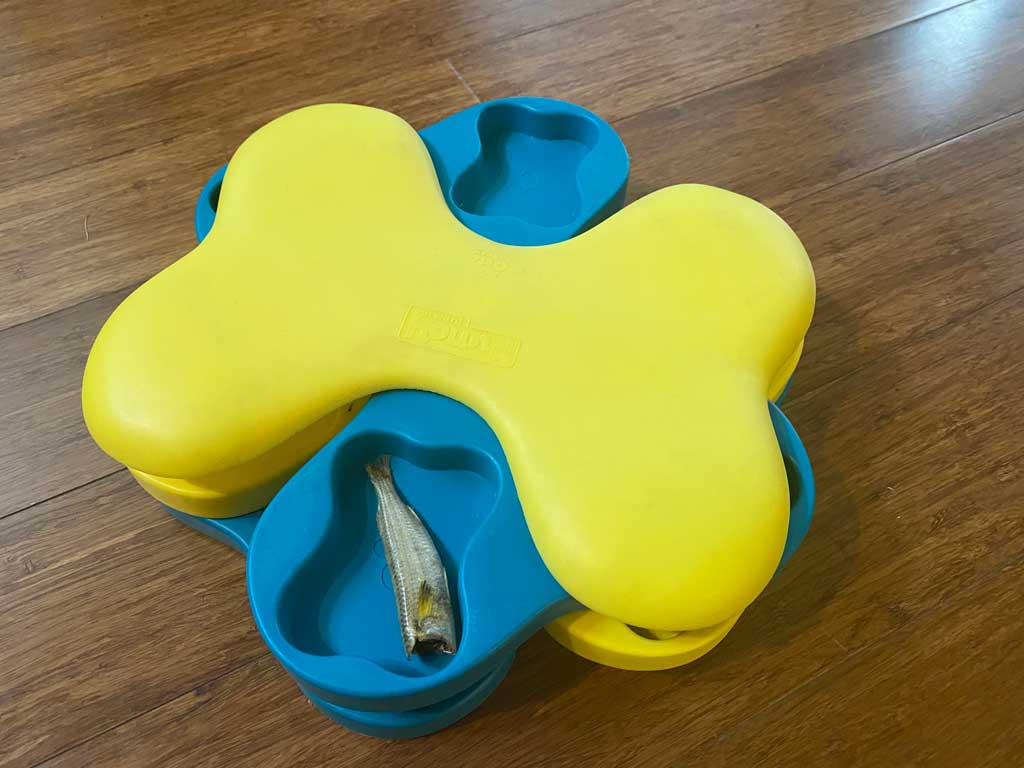
🟢 Level 1 — Beginner
Nina Ottosson Dog Beginner Puzzles
Simple sliding and lifting movements to uncover treats. Good starting point for puppies, senior dogs, or any dog new to puzzle toys. The goal at this level isn’t challenge — it’s teaching your dog that moving things with their nose and paw gets them a reward. Most dogs master these within a few sessions, at which point you move up.

🟡 LEVEL 2 — INTERMEDIATE
Nina Ottosson Intermediate Puzzles
Multiple steps required — lift, slide, and rotate to access treats. Good for dogs who’ve mastered the basics and need more of a challenge. This is the level most adult dogs land on once they’ve got the concept down. Keeps them occupied significantly longer than beginner puzzles.

🔴 LEVEL 3 — ADVANCED
Nina Ottosson Advanced Puzzles
Multi-step sequences, hidden compartments, and combinations of movements required to access all the treats. For dogs who demolish easier puzzles and need a genuine cognitive workout. Border Collies, Kelpies, and other working breeds tend to do well at this level — though any highly food-motivated dog is worth trying here.
📏 How to Choose the Right Level
Start at Level 1 if your dog:
- Is a puppy or has never used a puzzle toy before
- Gets frustrated easily and gives up
- Is a senior dog or a lower-energy breed
- Tends to chew toys rather than interact with them
Move to Level 2–3 if your dog:
- Solves beginner puzzles in under 2 minutes
- Gets bored quickly and stops engaging
- Is a high-drive or working breed
- Is highly food-motivated and persistent
What If Your Dog Isn’t Interested?
Plenty of dogs would rather run laps than faff around with a puzzle board — and that’s fine. Puzzle toys aren’t the only form of mental enrichment. A few alternatives that work just as well:
🐾 Puzzle-Free Enrichment Ideas
Hide and seek with treats
Have your dog wait in another room while you hide treats around the house, then let them sniff and search. It’s enrichment gold — taps into the same foraging instincts as puzzle toys with zero equipment.
Snuffle mat
Scatter kibble or treats through a snuffle mat and let your dog work through it with their nose. Lower barrier to entry than puzzle toys — most dogs take to them immediately.
Slow feeder bowl
Replace the regular bowl with a slow feeder at mealtimes. Turns every meal into a low-level enrichment activity with no setup. Good for dogs who eat too fast and aren’t interested in dedicated puzzle sessions.
A Note on Safety
Most puzzle toys are designed for supervised use. A few things worth knowing before you leave your dog with one unsupervised:
⚠️ Puzzle Toy Safety
- Watch how your dog interacts with it first. Some dogs problem-solve; others just chew. If your dog goes straight to chewing, supervise closely or opt for a chew-proof alternative like a snuffle mat.
- Check for small parts. Cheaper puzzle toys can have removable pieces that become choking hazards. Nina Ottosson toys are well-made with this in mind, but always inspect before first use.
- Clean regularly. Treat residue builds up in crevices. Most Nina Ottosson toys are dishwasher safe — check the specific product instructions.
- Retire damaged toys. Cracked plastic or loose pieces mean it’s time for a replacement, not a repair.
For more enrichment ideas, see our guides to mental stimulation for dogs and interactive dog toys for Australians.