
Disclosure: Dogs of Australia is reader-supported. When you buy through links on our site, we sometimes earn an affiliate commission at no added cost to you. Learn more
Toilet training is one of the first things to tackle when you bring a puppy home, and many owners use puppy pads to manage those early weeks. They’re not the right choice for every situation, but when used well they make the process significantly easier — particularly for owners without easy garden access or with puppies that aren’t yet vaccinated.
Toilet training takes time and patience regardless of approach. The key principle: it’s far easier to teach a puppy a new behaviour than to un-teach a wrongly learned one. Start early and be consistent.
When Puppy Pads Make Sense
🐾 5 Reasons People Use Puppy Pads
Bladder Control Limitations
Most puppies come home at around 8 weeks old. At that age, they can only hold their bladder for about 2–3 hours — roughly one hour per month of age. Unless you’re home constantly or someone can check in frequently, pads give your puppy somewhere appropriate to go between toilet trips.
No Garden Access
Apartment living or no direct garden access makes outdoor-only toilet training impractical in the early weeks. Pads allow you to toilet train your puppy inside and transition to outside later once access is easier.
Pre-Vaccination Period
Puppies shouldn’t go on shared ground until their vaccination course is complete — typically around 14–16 weeks. If you don’t have a private garden, pads are the safest option during this window.
Practical Convenience
Pads make clean-up straightforward — pick up and dispose. Many owners use them for overnight or when they’ll be out for a few hours, even if they’re otherwise training their puppy to go outside.
Extreme Weather
During heavy rain, storms, or very hot days, having an indoor toilet option means your puppy doesn’t have to wait and you don’t have to go out. Particularly relevant during Australian summers.
The Four Types of Puppy Pad
Reusable (Washable) Puppy Pads
The most environmentally friendly and cost-effective option over time. Washable pads can be laundered and reused repeatedly — better for the environment and cheaper per use than disposable options. A good choice if you plan to use pads for an extended period. See our full reusable puppy pads guide for more detail.
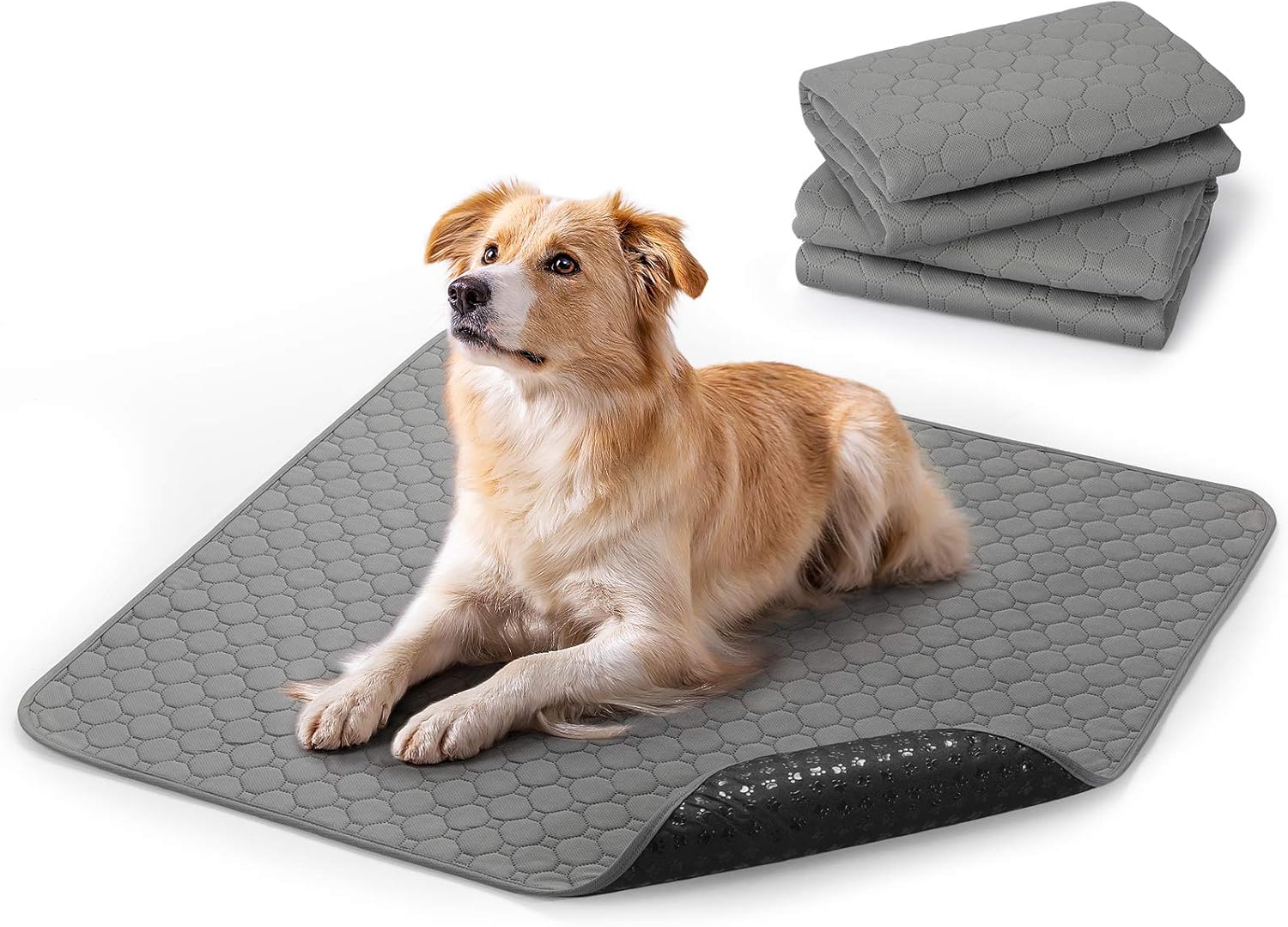
Rabbitgoo · Washable Pee Pads · From $46.99 · View on Amazon →
Single-Use Disposable Pads
The most common starting point — absorbent, disposable, and available in bulk. Convenient for the early weeks when accidents are frequent and you’re going through pads quickly. Not the most sustainable option, but practical when you need simplicity.
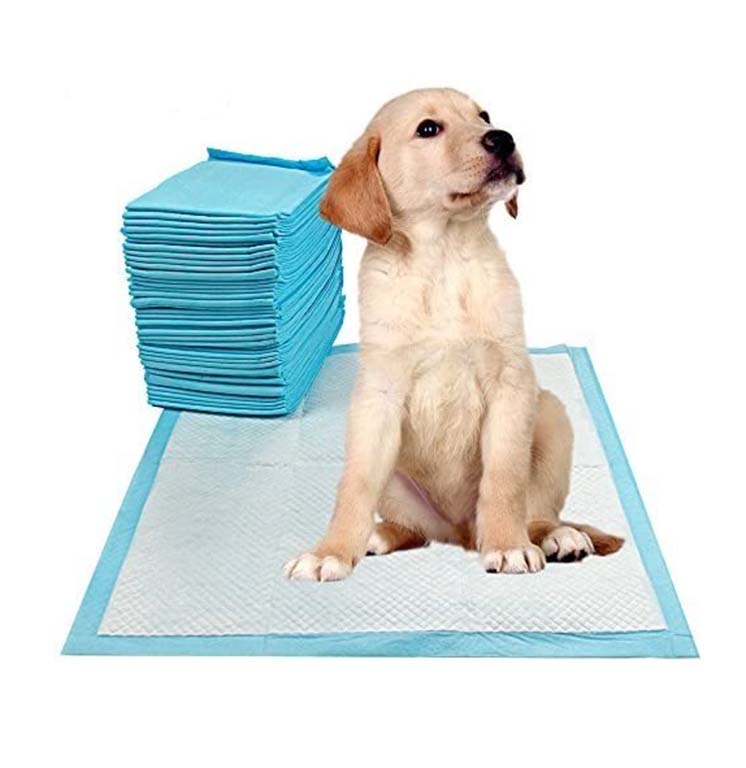
SAG Store · 200 or 400 pack · From $75.99 · View on Amazon →
Artificial Grass Pads
A grassy surface that teaches your puppy to associate grass with toileting — useful if you want to make the transition to an outdoor lawn easier later. The artificial grass sits over a tray that collects liquid. Requires regular rinsing to stay hygienic.
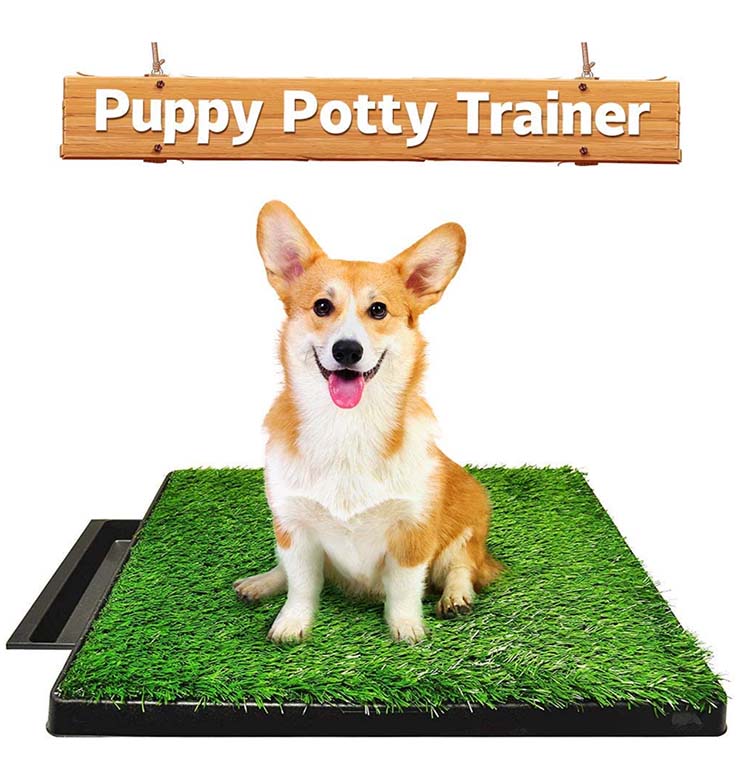
Ezonedeal Store · Pet Training Grass Mat · From $53.99 · View on Amazon →
Real Grass Pads
Hydroponically grown real grass delivered to your door. The natural scent encourages instinctive use and makes the transition to outdoor toileting easier. Requires regular replacement — not a one-off purchase. See our dog grass toilet review for a detailed look.
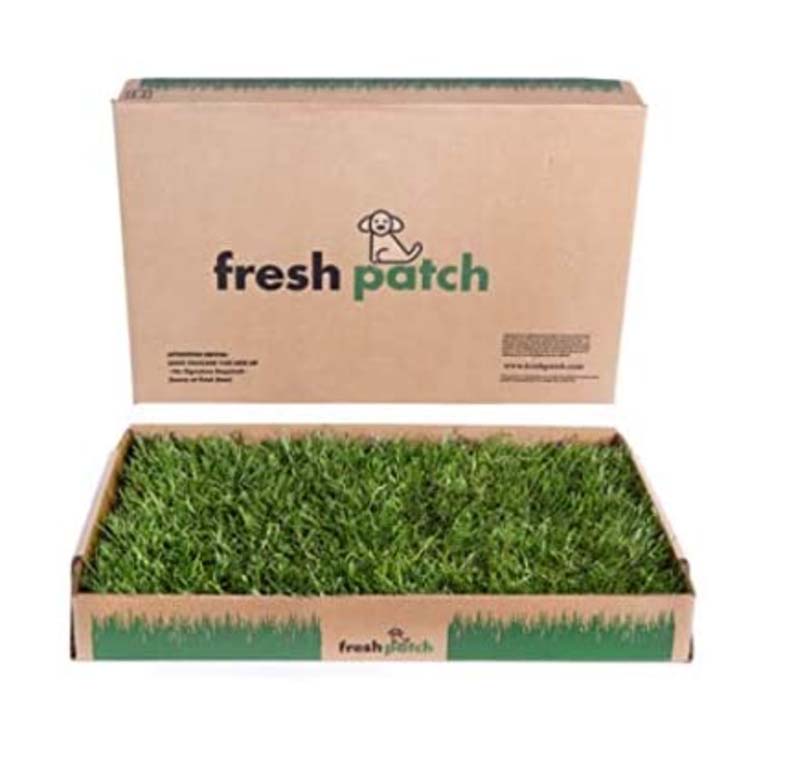
Fresh Patch Australia · Real Grass Pads · From $39.99 · View on Amazon →
How to Train Your Puppy to Use a Pad
🏠 Setting Up the Space
The most effective setup is a playpen with a crate inside. Dogs naturally avoid toileting where they sleep and eat — so place the pad on the opposite side of the pen from the crate and food bowl. Your puppy will gravitate toward the pad when they need to go rather than soiling their sleeping area.
✅ Training Steps
Getting Started
- Watch your puppy closely for signs they’re about to go — sniffing the ground, circling, or squatting
- When you see these signs, calmly pick up your puppy and place them on the pad
- Say your cue word as they go — “go potty” or similar. Keep it consistent
- When they toilet on the pad, reward heavily with praise and a treat immediately
- Expect to repeat this many times before your puppy goes to the pad independently
Handling Accidents
- Never punish your puppy for an accident — they won’t understand why and it creates fear and anxiety around toileting
- If you catch them mid-accident, interrupt with a sharp sound (a clap, not yelling), then calmly move them to the pad
- Clean the accident spot thoroughly with an enzymatic cleaner — avoid products containing ammonia, which smells similar to urine and can attract your puppy back to the same spot
- Dogs tend to return to places that smell like their previous toileting — thorough cleaning is as important as the training itself
💡 Do Puppy Pads Have an Attractant?
Many brands include an attractant — usually ammonia, pheromones, or grass scent — that encourages puppies to use the pad. This can be useful in the early days of training when you’re trying to establish the association. Check the packaging if this matters to you — it’s not universal across all brands.
Transitioning From Pads to Outside
🌿 Moving to Outdoor Toileting
When to Start
- Once your puppy is fully vaccinated and it’s safe to go on shared ground
- Once your puppy can sleep through the night without needing to toilet — a sign their bladder control is developing
- You don’t need to transition abruptly — a gradual approach works better
How to Transition
- Remove pad access for a few hours at a time during the day
- Watch for signs your puppy needs to go and take them outside immediately
- Reward heavily when they toilet outside
- Gradually extend the periods without pad access as your puppy reliably goes outside
- Maintain overnight pad access until your puppy can consistently hold through the night
Frequently Asked Questions
❓ Puppy Pads FAQ
Are puppy pads safe?
Generally yes — but they’re not indestructible. A bored puppy with insufficient stimulation may start shredding and chewing the pad, which creates a choking and blockage risk. Make sure your puppy has enough mental stimulation, toys, and playtime. If your puppy is repeatedly destroying pads, supervise more closely and provide better chew alternatives.
What happens if a dog eats a puppy pad?
Puppy pads are designed to be absorbent — if ingested, the material can absorb fluids from the gastrointestinal tract and expand in size, potentially causing a blockage. If your puppy has eaten a significant amount of pad material, call your vet immediately rather than waiting to see if symptoms develop.
Should you rub a puppy’s nose in their pee?
No — this is ineffective and harmful. Puppies don’t have the cognitive capacity to connect the punishment to something they did minutes ago. Rubbing their nose in it creates fear and stress around toileting without teaching them anything useful. It can make accidents more likely, not less. Use positive reinforcement only.
How long should you use puppy pads?
It depends on why you’re using them. If you were using pads because your puppy wasn’t vaccinated yet, you can start transitioning as soon as it’s safe to go outside. If you were using them for convenience or overnight, many owners stop once their puppy can reliably sleep through the night without needing to go. There’s no single right answer — stop when it makes sense for your situation.
Can using puppy pads make toilet training take longer?
It can if pads are used indefinitely without a clear plan to transition outside. The goal is to use pads as a bridge, not a permanent solution. If you want your dog to eventually toilet outside, start reducing pad access and taking them out regularly as soon as your situation allows. Dogs that have been on pads for a long time can be transitioned — it just takes more consistent work.