
Disclosure: Dogs of Australia is reader-supported. When you buy through links on our site, we sometimes earn an affiliate commission at no added cost to you. Learn more
Labradors are Australia’s most registered dog breed — and it’s easy to see why. They’re enthusiastic, food-motivated, highly trainable, and deeply social. They’re also capable of destroying the wrong toy in minutes and of going completely feral if they don’t get enough mental and physical stimulation.
The toys that work best for Labs tend to fall into two categories: retrieving toys that tap into their original purpose, and enrichment toys that give their considerable brain something to work on.
📋 In This Guide
Retrieving Toys
🎾 Why Labs Love to Fetch
Labradors were bred as working retrievers — their instinct to chase, pick up, and return objects is deep and genuine, not just trained behaviour. Retrieving games are one of the most satisfying and tiring activities for the breed. The combination of physical exercise, nose work (tracking where the toy landed), and the reward of returning it to you makes fetch genuinely fulfilling rather than just entertaining. A good retrieving session will tire a Lab far more thoroughly than a walk of the same duration.
🏆 Best Retrieving Toy
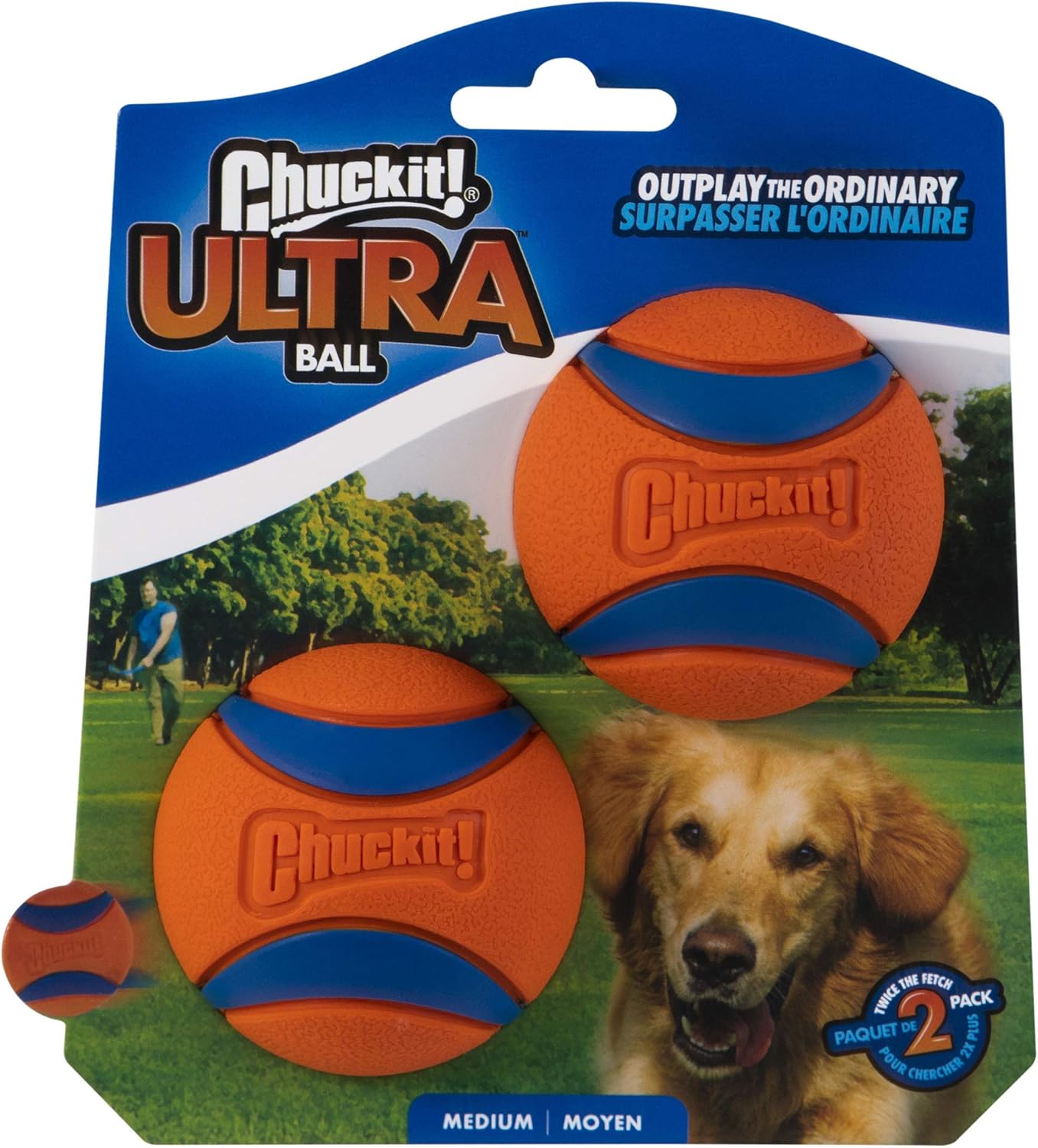
Chuckit! Retrieving Ball
The go-to fetch ball for Labs. Chuckit balls are designed with high bounce, high buoyancy, high visibility, and high durability — a significant step up from a tennis ball on all four counts. Waterproof for beach and river sessions, which most Labs will appreciate. Available in five sizes to suit the dog.
- High bounce, high buoyancy, high visibility
- Waterproof — great for beach and river play
- Available in 5 sizes
- Significantly more durable than a tennis ball
From $11.96
RETRIEVING DUMMY
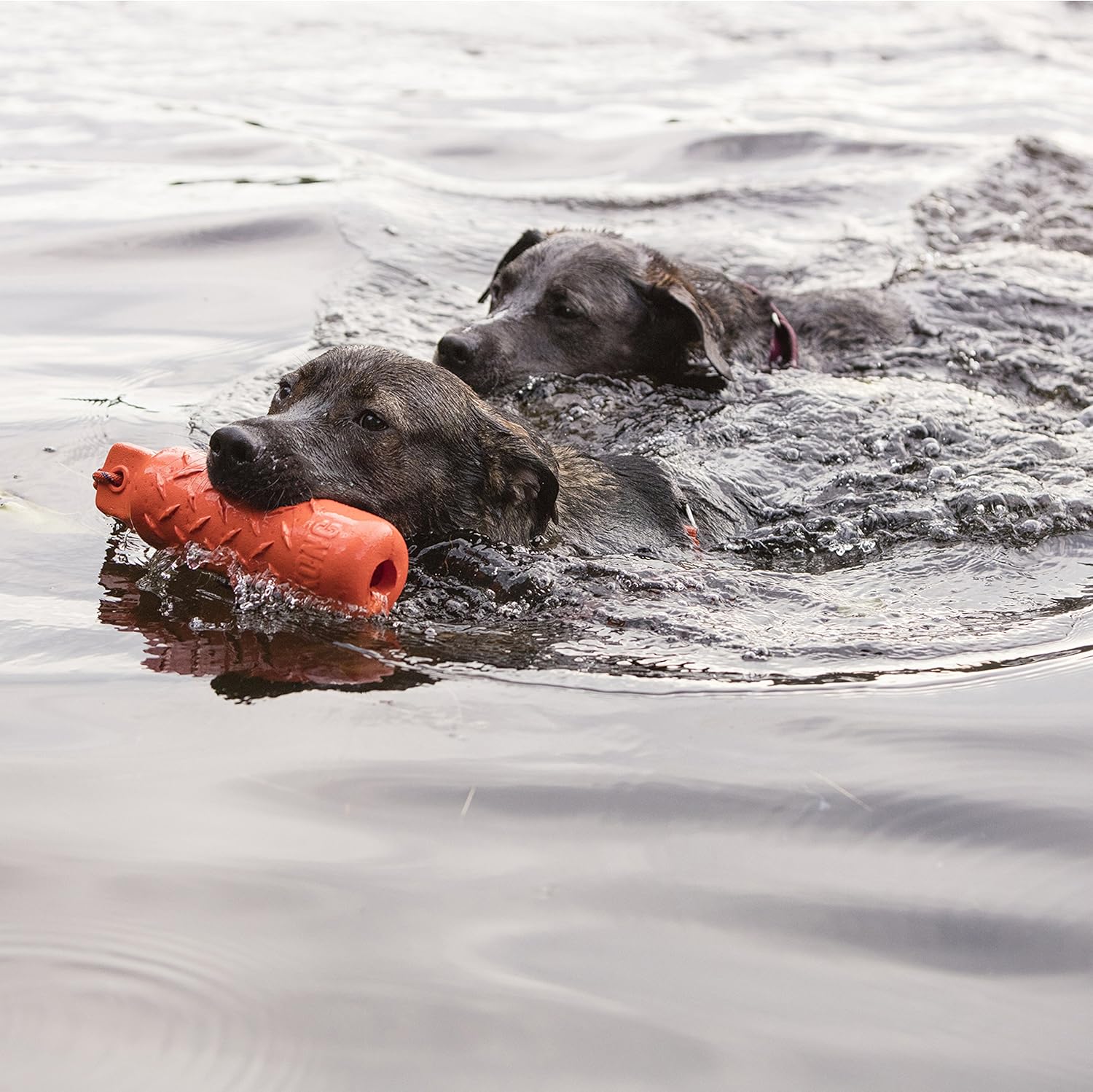
Kong Retrieving Dummy
A waterproof dummy-style retrieving toy from Kong — ideal for Labs that love water retrieves. The elongated shape is easy to throw accurately and satisfying for a dog to carry back. A good choice if your Lab is into proper retrieve training.
From $33.27
Enrichment Toys
🧠 Why Enrichment Matters for Labs
Labradors rank in the top 10 most intelligent dog breeds out of 138 tested — capable of learning new commands in fewer than five repetitions. A brain that capable needs proper exercise, not just physical activity. Under-stimulated Labs are prone to destructive behaviour, counter-surfing, excessive barking, and general mayhem. Enrichment toys that require problem-solving — treat dispensers, snuffle mats, puzzle feeders — address the mental side of a Lab’s needs and often produce a more genuinely tired dog than a walk does. See our enrichment feeding guide for the full picture.
BEST TREAT DISPENSER
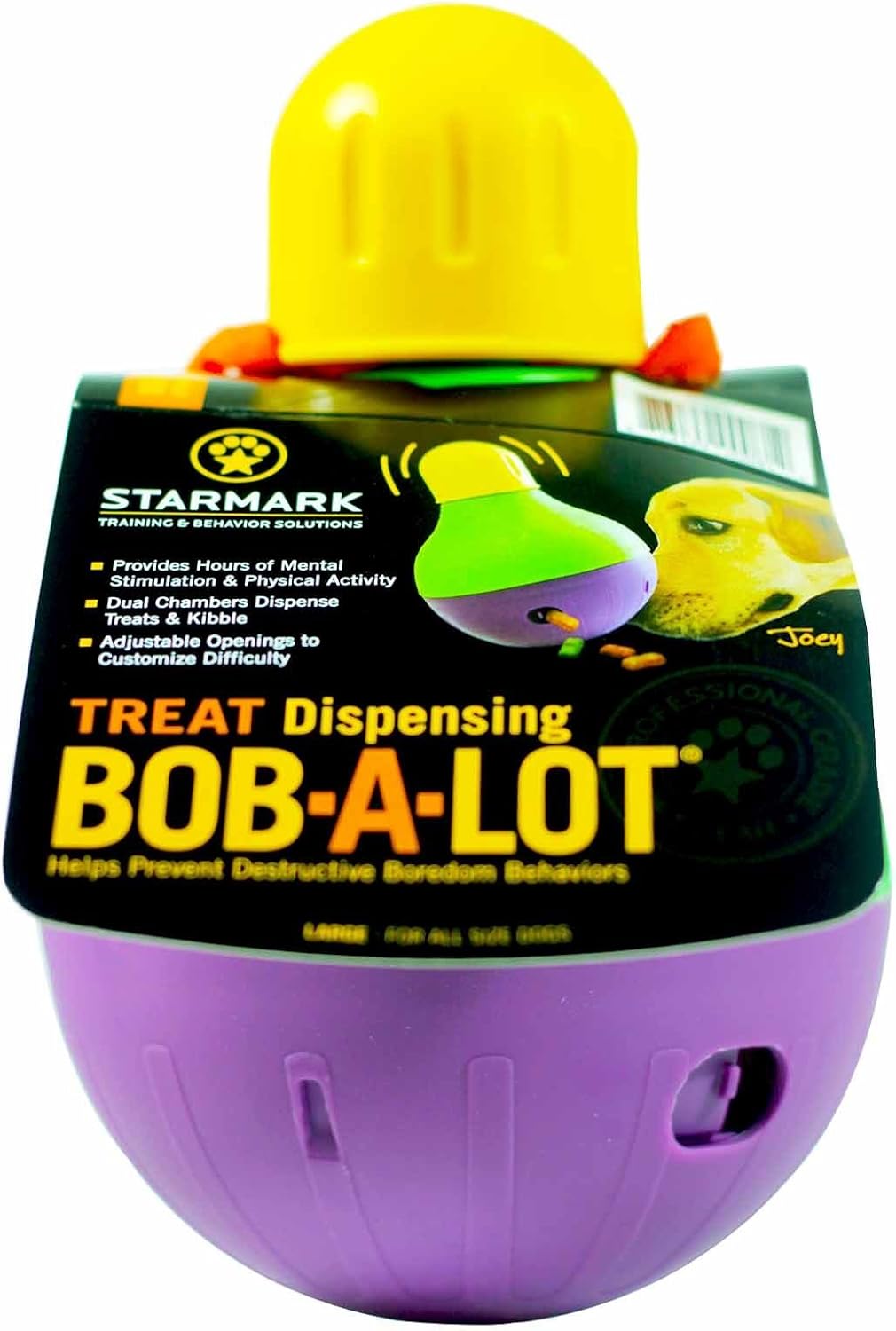
Bob-A-Lot Interactive Toy
A weighted wobble feeder with adjustable openings at top and bottom — lets you control the difficulty and accommodate different treat sizes. The anti-slip weighted base makes it wobble erratically rather than just rolling predictably. Good for feeding a Lab’s daily kibble ration to slow them down and add mental work to mealtime.
From $29.60

BEST SNUFFLE MAT
PAW5 Snuffle Mat
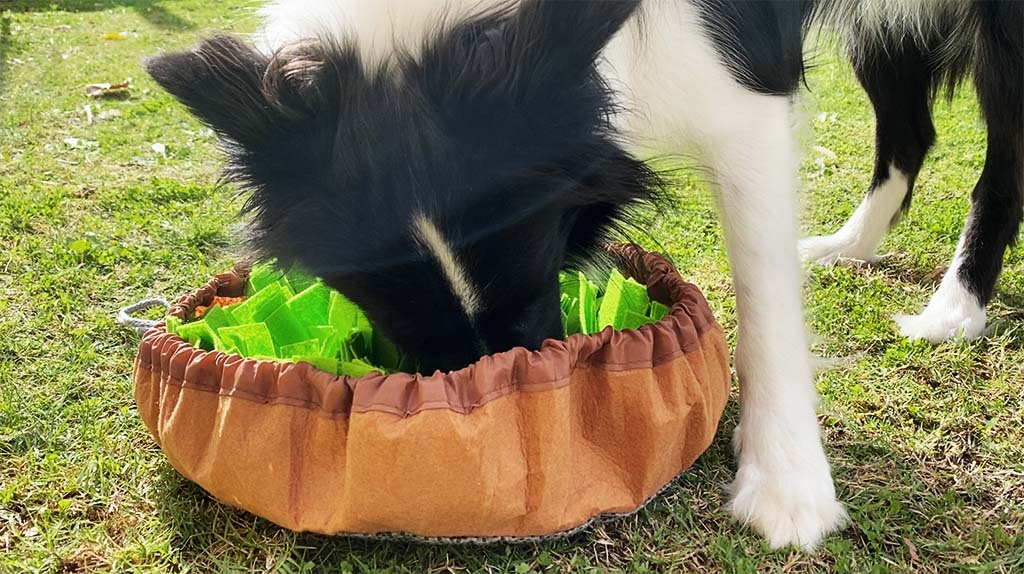
A dense snuffle mat that encourages natural foraging — scatter kibble or treats through the fibres and let your Lab search. Engages the nose intensively and is genuinely tiring in a way that passive toys aren’t. See our full snuffle mat guide for Australian-made alternatives and DIY options.
From $55.55
What to Look For When Buying Toys for a Labrador
✅ Buying Checklist
- Size appropriately: A toy sized for a small dog is easily destroyed and a choking hazard for a grown Lab — always check weight and size recommendations
- Prioritise material quality: Cheap plush toys and thin rubber won’t last — look for heavy-duty rubber, reinforced stitching, or food-grade materials
- Check for strong chemical smell: If a toy smells uncomfortable to you, it’s likely overwhelming to a dog’s nose — avoid anything with an intense synthetic smell
- Retire damaged toys promptly: Remove and replace any toy that is cracking, breaking apart, or has sharp edges — don’t wait until it fails completely
- Rotate rather than pile: Too many toys at once reduces novelty — keep two or three out at a time and rotate the rest to maintain interest
Frequently Asked Questions
❓ Labrador Toys FAQ
Why does my Labrador destroy every toy?
Labs have strong jaws and a natural drive to chew and carry — combined with a lot of energy, this means standard toys often don’t last. The solution is choosing toys made specifically for larger, stronger dogs rather than buying the same cheap toys repeatedly. Kong rubber products (particularly the black Extreme range), solid rubber balls, and hard nylon chews hold up significantly better than plush or thin rubber alternatives.
How much exercise does a Labrador need?
Adult Labs generally need at least 60–80 minutes of exercise per day, ideally including some off-lead run time or fetch sessions. Mental stimulation through enrichment toys and training sessions should supplement physical exercise — Labs are smart enough that boredom from under-stimulation is as much of a problem as under-exercise. Young Labs (under 12–18 months) should have their exercise moderated to protect developing joints — ask your vet for breed-specific guidance.
Are Labs good at fetch?
Usually yes — the retrieving instinct is deeply built into the breed. Most Labs take to fetch naturally, though some need a little encouragement to return the toy rather than running off with it. A good retrieve can be shaped with basic training; if your Lab won’t bring the toy back, use two identical toys and throw the second one when they have the first — they’ll often drop the one they have to chase the new one.
Have a Labrador lover in your life? See our Labrador gift guide for 14+ ideas.