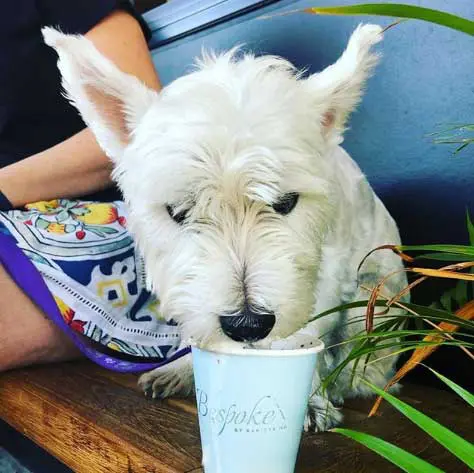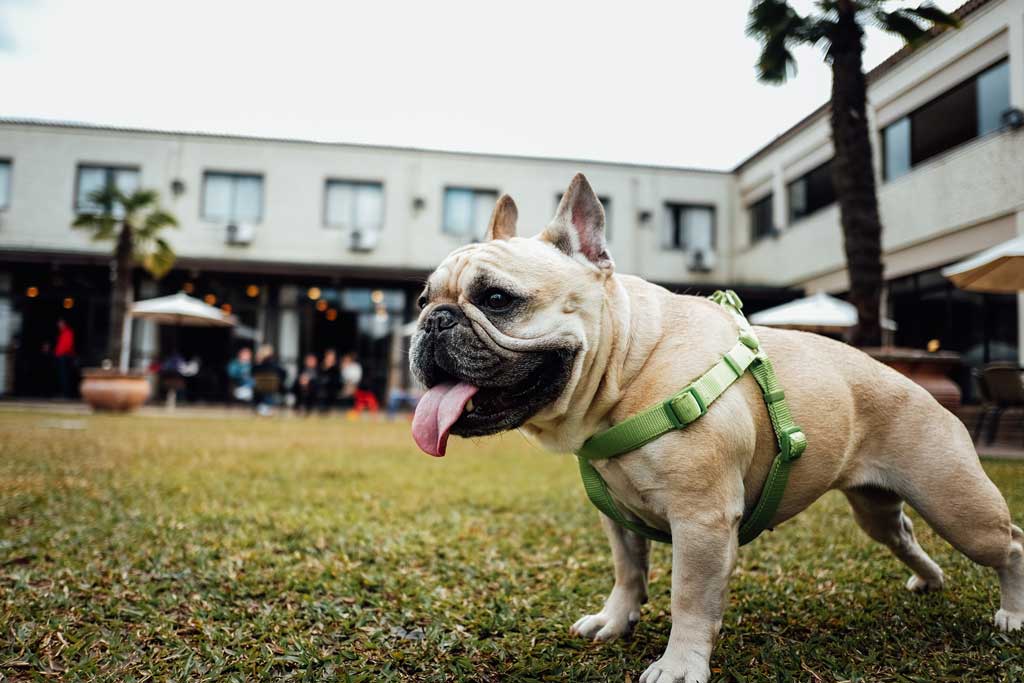

Walk into almost any dog-friendly café in the country right now, order a coffee, and there’s a good chance the barista asks a second question before you’ve even paid: “And one for the pup?” The puppuccino, a little cup of something creamy handed over the counter for your dog, has gone from Starbucks secret-menu curiosity to standard Australian café etiquette in about a decade. It’s on the menu in Bondi. It’s on the menu in Fremantle. It is, by any reasonable measure, a genuine cultural phenomenon wearing the disguise of a freebie.
Nobody ever asks what’s actually in the cup, though. So we did.
What’s Actually in the Cup
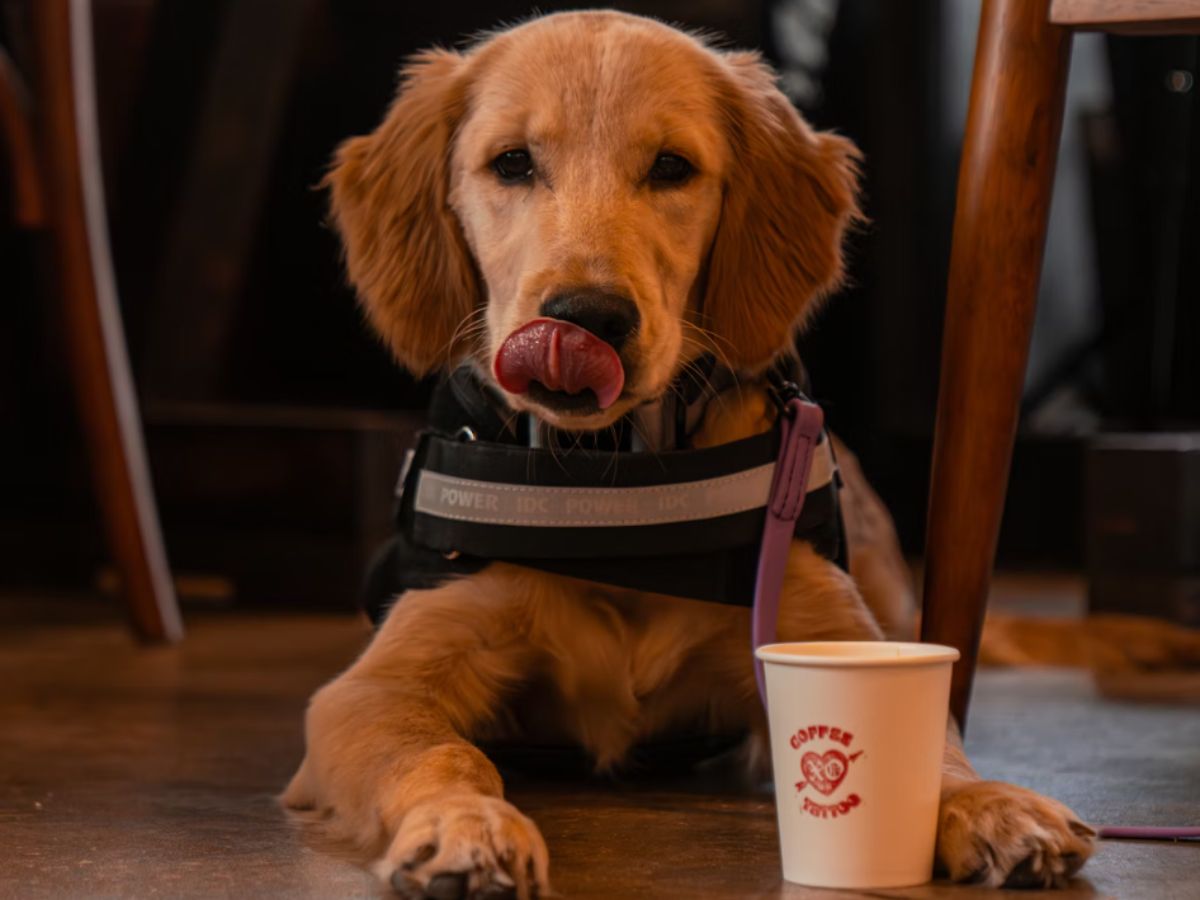
Ask ten cafés what goes into their puppuccino and you’ll get ten slightly different answers, because there’s no puppuccino standard, no recipe card handed down from Seattle when the trend was coined by rescue advocate Rocky Kanaka back in 2008. What we actually found, after digging into it:
🔍 The Three Versions You’ll Actually Get
☕️ The Original
Straight aerosol whipped cream, the same can behind the espresso machine, just with more of it in your dog’s cup. That means cream, milk, mono and diglycerides (a preservative), and carrageenan (a thickener) — a little more engineered than “whipped cream” sounds, but nothing sinister.
🥛 The Health-Conscious Version
Increasingly common as cafés clock that regular dairy isn’t ideal for every dog: lactose-free milk or yoghurt, sometimes warmed, with a treat dropped on top instead of a mountain of cream.
🍪 Just a Biscuit
Some places skip the cream altogether and hand over a dog treat in a cup, still calling it a puppuccino because the name has outgrown the actual contents at this point.
None of that is a red flag. It’s just proof the puppuccino was never standardised, it was crowdsourced by a thousand independent baristas deciding what seemed reasonable.
Is Any of This Actually Bad for Your Dog?
Here’s where the investigation gets less interesting than the internet wants it to be: for most healthy adult dogs, a small cup of whipped cream is genuinely fine.
🔍 The Real Verdict
Plenty of adult dogs are lactose intolerant to some degree, so a rich dairy puppuccino can mean gas or a soft stool for a few hours. Unpleasant for everyone involved, not dangerous. The genuine hazard sits somewhere else entirely: sugar-free or “diet” whipped cream, which can contain xylitol. The FDA is blunt about xylitol: it triggers a rapid insulin release in dogs, which can cause seizures and, in severe cases, liver failure. It’s rare in whipped cream specifically, but it exists, and it’s a five-second label check before you let your dog anywhere near a “lite” version of anything.
Translation: the cream itself was never really the risk. The word “sugar-free” is.
So Why Do Cafés Even Bother?
This is the actual question, and it’s not really about whipped cream at all. Australians now spend an estimated $21.3 billion a year on their pets, a 35 per cent jump since 2022, and roughly one in three owners say they’d spend more on their dog than on some of their actual relatives. Treat spending alone is climbing 5 to 7 per cent a year as owners trade up to “premium” and “functional.” That’s the economy a puppuccino was born into.
Against numbers like that, a cup of whipped cream that costs a café next to nothing buys something specific: the dog remembers the place, the owner notices the dog was looked after, and both come back. It’s not charity. It’s one of the cheapest customer-retention tools a hospitality business has ever stumbled into, and it happens to also make a dog’s day. Some cafés have even started charging for it as the trend scales past “quiet secret menu item” into “expected line on the menu” (a genuine ongoing debate: is $2 for a puppuccino reasonable, or a bit rich for a squirt of cream?).
Call it canine capitalism if you want to be dramatic about it. We’d call it one of the rare moments where the marketing incentive and the dog’s actual interests happen to point in exactly the same direction. Nobody’s really losing here. Least of all the dog.
💡 The Actual Takeaway
- Most puppuccinos are genuinely fine for a healthy adult dog in small, occasional amounts.
- If your dog is lactose intolerant or on a restricted diet, just ask. Most baristas will happily tell you what’s in it, and plenty can do a lactose-free version on request.
- The only word that should actually worry you is “sugar-free.” Check the label for xylitol before your dog gets near it.
- Yes, it’s a marketing tool. It’s also a genuinely nice thing to hand a dog. Both are true at once, and your dog doesn’t care which one it is.
Want the full breakdown of ingredients, a homemade recipe, and where to actually find one? Here’s our complete puppuccino guide, plus city guides for Perth, Melbourne and Sydney. Or skip straight to the map: search every dog-friendly café in our directory with a puppuccino on the menu, filtered by location and updated as new spots get added.