
Disclosure: Dogs of Australia is reader-supported. When you buy through links on our site, we sometimes earn an affiliate commission at no added cost to you. Learn more
A dog’s nose processes the world at a level we can barely comprehend — their ability to analyse smells is up to 40 times greater than ours. Nosework gives them an outlet for that capacity, and it’s one of the most effective ways to genuinely tire a dog out — often more so than a long walk.
It’s accessible, cheap to start, and works for almost every dog — including anxious ones that struggle with more social or physical activities.
What Is Nosework?
Nosework is a dog sport adapted from professional detection dog work — the same instincts that make dogs effective at finding drugs, missing persons, and contraband, redirected into a game. Dogs are asked to find specific target odours or hidden treats using only their nose, progressing through increasing levels of difficulty as they build skill and confidence.
At the casual end, nosework is simply a structured sniffing game you can play at home with cardboard boxes. At the competitive end, dogs and handlers work through trials, searching vehicles, interiors, exteriors, and containers for specific target odours. Most people start at home and never go further — and that’s completely fine. The benefits are real regardless of the level.
Why It’s Good for Dogs
🐾 Benefits of Nosework
Genuinely Tiring
Sniffing is energetically expensive for dogs. A focused nosework session can tire a dog out more effectively than a walk of the same duration — which makes it particularly useful on rainy days, for recovering dogs, or for dogs that need more stimulation than their owners can physically provide.
Builds Confidence in Anxious Dogs
Nosework is structured so that the dog succeeds regularly — they’re hunting for something using their natural talent, and they find it. Regular small wins in a controlled environment can do a lot for dogs that are timid or anxious. It’s one of the few activities where the dog leads and the handler follows.
Accessible for All Dogs
Unlike agility or flyball, nosework doesn’t require physical athleticism. Older dogs, dogs recovering from injury, reactive dogs that struggle with group classes, and dogs with mobility limitations can all participate. The difficulty scales to the individual dog, not the other way around.
Provides Mental Stimulation
Dogs need their brains exercised as much as their bodies. Nosework engages problem-solving, focus, and persistence in a way that passive activities don’t. Combined with enrichment feeding, it covers the mental exercise side of your dog’s daily needs effectively.
How to Get Started
There are two routes: joining a class with a nosework instructor, or starting at home with simple games. Both work.
A class provides structured progression — you’ll move from finding treats to finding specific target odours, and eventually to competitive trials if that interests you. To find a class near you, search for nosework or scent detection clubs in your state, or ask your vet or local training club.
If a class isn’t nearby or you’d rather start at home, the cardboard box game below is a legitimate starting point that costs nothing.
Simple Home Nosework Game
📦 The Cardboard Box Game
What You Need
- 3–6 cardboard boxes in different sizes
- Your dog’s favourite treats (split into two sets — hiders and rewards)
- A quiet corner of a room inside your home
- A cue word — “find it” works well
How to Play
- Set up the boxes in a dedicated corner — varying sizes adds interest
- Hide 5 treat pieces in different spots: one on top of a box, one inside, one behind, one underneath
- Bring your dog to the area and give your cue word (“find it”)
- Let your dog sniff freely — don’t guide or rush them
- Each time they find a treat, verbally mark it (“yes!” or “good”) and give a bonus reward treat from your second set
- As your dog gets the idea, increase difficulty — hide treats in harder spots, add more boxes, or reduce the number of hiding spots so they have to search harder
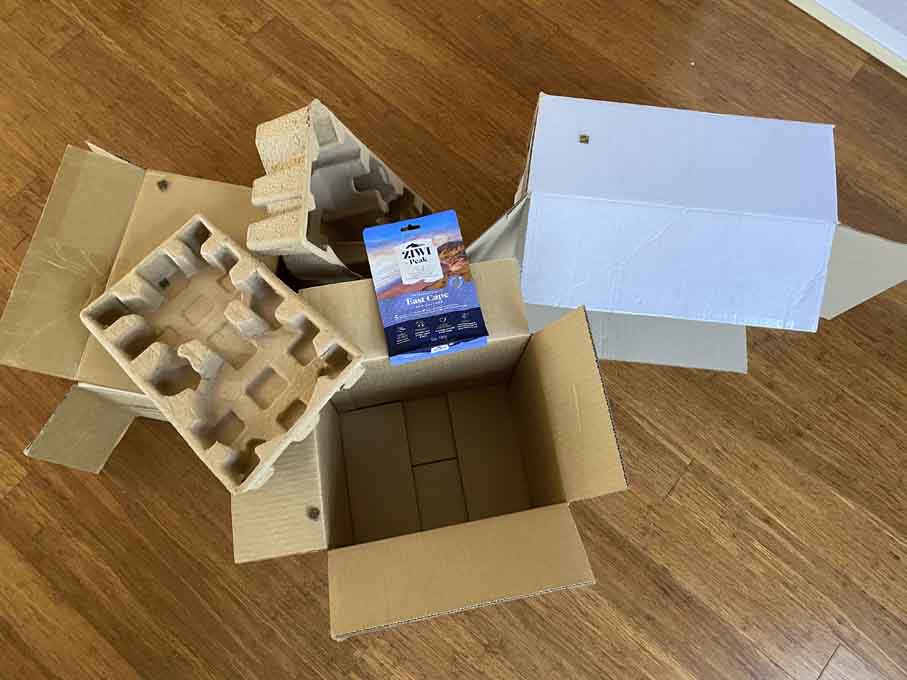
An example home setup — mix different sizes and positions to vary the difficulty.
Nosework Toys and Supplies
You don’t need to spend anything to start nosework — cardboard boxes, toilet rolls, and towels all work. But if you want to add proper nosework tools, here are the main options.
💡 Free DIY Options to Try First
- Cardboard boxes: Mix and match sizes and configurations for variety
- Toilet paper rolls: Stuff with treats, fold the ends closed, hide around the house for your dog to find
- Towels: Wrap treats inside a folded towel and let your dog figure out how to extract them — surprisingly effective and satisfying to watch
Snuffle Mats
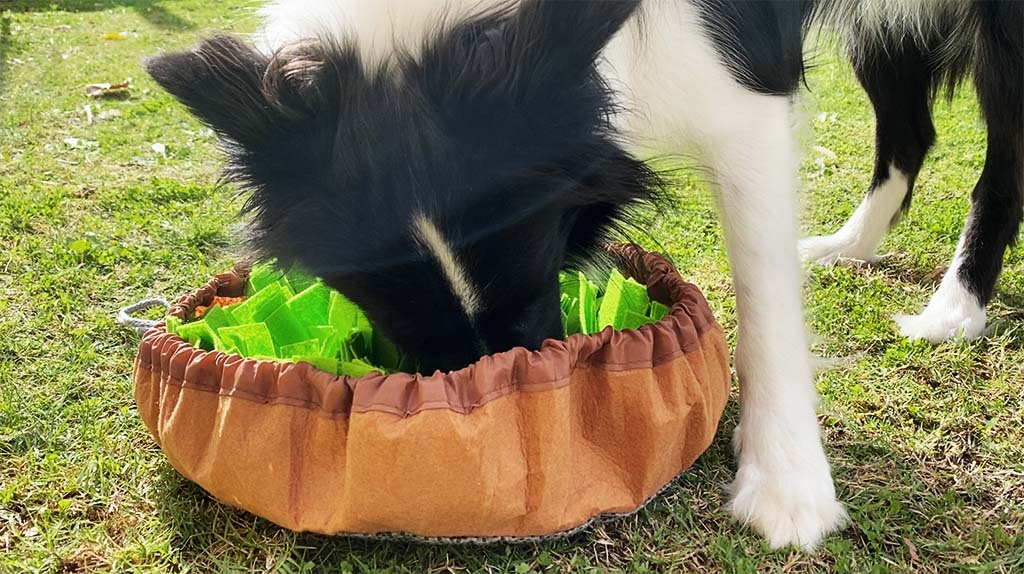
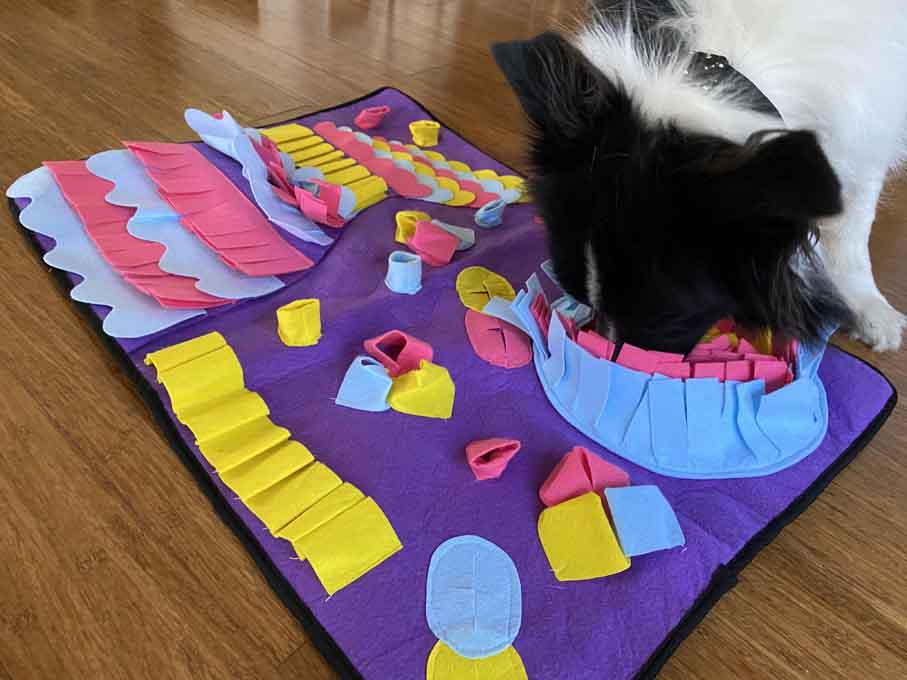
A snuffle mat is one of the most practical nosework tools available — fleece fibres that hide treats your dog has to sniff out. You can make your own, buy one from a local maker at a farmers market or on Etsy, or order from Amazon. Our full snuffle mat guide covers all the options.
Frequently Asked Questions
❓ Nosework FAQ
Can any dog do nosework?
Yes — nosework is genuinely one of the most accessible dog activities available. Age, size, breed, and physical ability are not barriers. The difficulty scales to the individual dog. Even very reactive dogs that can’t manage group settings often do well at nosework because they can work individually without other dogs present.
Is nosework the same as scent work?
Yes — the terms are used interchangeably. In Australia you may also see it called scent detection or scent sports. The formal sport is often referred to as K9 Nose Work (particularly in the US context) or Scent Work in competition settings, but the underlying activity is the same.
How long should a nosework session be?
Start short — 5 to 10 minutes is plenty for a beginner dog. Nosework is genuinely tiring, and overdoing early sessions can frustrate or exhaust a dog before they’ve developed the skill and stamina for longer searches. Build duration gradually as your dog gets more confident and experienced.
Will nosework make my dog obsessively sniff everything on walks?
No — this is a common concern but not supported in practice. Nosework uses a specific cue word to start the game, and dogs learn to distinguish between the game context and regular walks. If anything, dogs that get adequate sniffing enrichment at home tend to be calmer and less frantic about sniffing on walks.
Where can I find a nosework class in Australia?
Search for nosework, scent detection, or scent sports clubs in your state. Dog training clubs often run nosework as a separate class or activity. Your local vet may also be able to point you toward a qualified instructor. If nothing is nearby, the home cardboard box game is a legitimate way to start and develop the foundations before a class becomes accessible.