
Disclosure: Dogs of Australia is reader-supported. When you buy through links on our site, we sometimes earn an affiliate commission at no added cost to you. Learn more
So, here’s the scoop: goat horns for dogs are kind of like the coriander of the dog treat world. Some people swear by them, others wouldn’t touch them with a 10-foot leash.
In this article, we’ll chew over both the pros and cons of goat horns, answer some FAQs, and help you decide if this natural treat is right for your furry mate 🐶.
What Are Goat Horns for Dogs, Anyway?
As the name suggests, they’re… well, goat horns. These tough chews are made from the actual horns of goats — which consist of a bony core covered in keratin (yep, the same stuff our nails are made of).
Unlike antlers that shed seasonally, goat horns are permanent fixtures. They grow throughout the goat’s life and never fall off naturally.
Most goat horns for dogs are by-products from farm goats raised for human consumption, so they’re often considered a more sustainable chew option.
Our Top Pick for Goat Horns
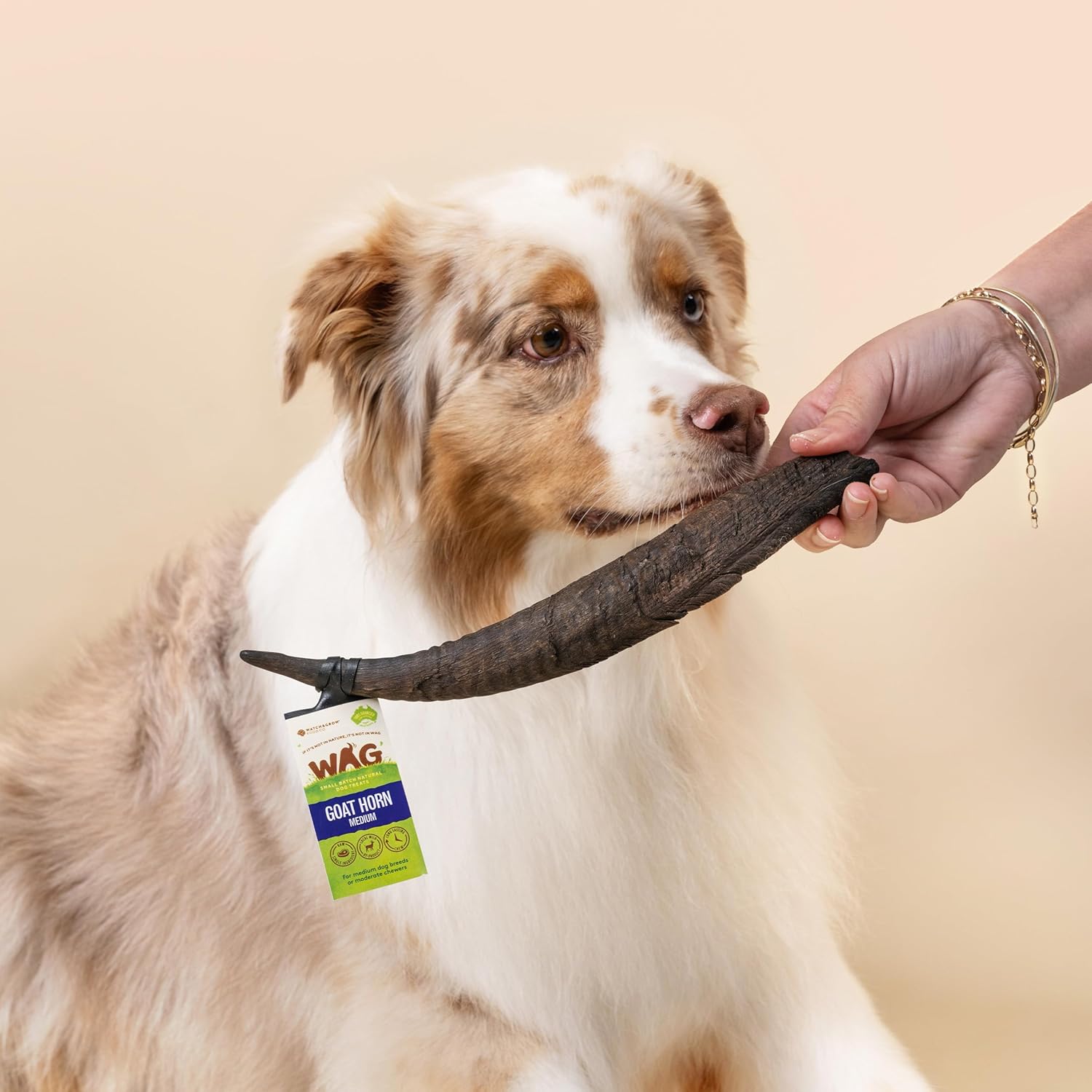
🏆 Our Top Pick
Australian Made Goat Horns from WAG
✅ 100% Natural: No artificial additives, preservatives, or fillers – just pure goat horn
✅ Long-lasting chew: Rich with keratin, these horns keep strong chewers occupied for hours
✅ Dental benefits: Natural chewing action helps scrape away up to 70% of tartar build-up
✅ Ethically sourced: All WAG Goat Horns are humanely and sustainably sourced from Australian farmers
Why Some Dog Owners Love Goat Horns
✅ The Benefits
Fans of goat horns say they’re:
- 100% natural: Single-ingredient treat with no additives or preservatives
- Long-lasting: A win for strong chewers who destroy other treats in minutes
- Low to zero fat: Great for dogs who need to watch their weight
- Packed with natural minerals: Contains keratin and other nutrients
- Great for dental health: Mechanical abrasion helps scrape away plaque and tartar
- Can be stuffed: Hollow center can be filled with meat, pâté, or peanut butter for extra engagement
- Long-lasting: Keeps strong chewers occupied for hours or even days
But Are Goat Horns Safe?
Here’s where things get a bit ruff…
The Great Goat Horn Debate
✅ The “Yes” Camp
Supporters argue that goat horns are a safe, natural chew that keeps dogs occupied and helps clean their teeth by scraping away plaque. Because they’re low in calories, they’re often seen as a better alternative to fattier options like pig ears.
⚠️ The “Not-So-Sure” Camp
Others warn that goat horns can be too hard. The concern? If a chew is harder than your fingernail can dent, it might be hard enough to break your dog’s teeth. Fractured molars, exposed pulp, and painful inflammation are just some of the potential risks.

Can Goat Horns Actually Hurt Dogs?
⚠️ Real Risks to Be Aware Of
Unfortunately, yes — goat horns can cause injuries in some cases.
- Tooth fractures: Vets have seen broken teeth caused by hard chews like antlers, bones, and goat horns
- The fingernail test: If a chew is harder than your fingernail can dent, it might be hard enough to break your dog’s teeth
- Exposed pulp and inflammation: Fractured molars can lead to painful infections and expensive vet visits
- Hidden pain: Dogs don’t always show pain the way humans do, so injuries can go unnoticed until they get worse
- Choking hazards: Large pieces that break off can pose choking or obstruction risks
That’s why supervision is KEY when offering tough chews. If you’re seeing overly aggressive gnawing or hear any scary cracking sounds — it’s time to take it away and reassess.
Why Do Dogs Need Chew Treats in the First Place?
The Dental Health Connection
Great question! Chewing isn’t just a fun pastime — it’s essential for canine health.
Over 80% of dogs over age 3 have some level of dental disease. Chew treats help reduce plaque and tartar through mechanical abrasion (aka, the gnawing action), which can play a big role in keeping those pearly whites clean.
But chews alone aren’t enough. The best approach to dental health includes:
- Brushing your dog’s teeth regularly with pet-safe toothpaste
- Softer dental chews like Greenies or OraVet
- Dental diets or vet-approved water additives
- Regular professional dental cleanings
Best bet? Chat with your vet to figure out what’ll work best for your doggo’s individual needs.
Common Questions About Goat Horns for Dogs
Frequently Asked Questions
Are Goat Horns Safer Than Antlers?
Both goat horns and antlers are very hard and carry similar risks of tooth fractures. However, goat horns have a hollow centre filled with marrow, which some dogs find more enticing and which can make them slightly easier to chew through.
Neither is necessarily “safer” — both require supervision and should only be given to dogs with healthy teeth and appropriate chewing styles.
How Long Do Goat Horns Last?
One of the biggest appeals of goat horns is their longevity. For power chewers, a single goat horn can last weeks or even months, making them quite cost-effective compared to softer treats that disappear in minutes.
The exact lifespan depends on your dog’s chewing style, the size of the horn, and how often you offer it.
Can Puppies Have Goat Horns?
No, goat horns are not recommended for puppies. Puppies have softer developing teeth that are more prone to damage, and they don’t yet have the jaw strength to safely handle such hard chews.
Wait until your puppy has all their adult teeth (usually around 6-7 months old) and has developed strong chewing habits before introducing goat horns. Even then, close supervision is essential.
Should I Take Away the Goat Horn When It Gets Small?
Yes, absolutely. Once a goat horn becomes small enough that your dog could potentially swallow it whole or get it lodged in their throat, it’s time to retire that piece.
As a general rule, take it away when it’s smaller than your dog’s muzzle width. Better safe than sorry!
Do Goat Horns Smell Bad?
Compared to other natural chews like pig ears or bully sticks, goat horns have relatively little odour. They’re not completely scent-free (especially when fresh), but most dog owners find them much less offensive than other chew options.
The smell typically decreases even more after your dog has been working on it for a while.
Can I Stuff Goat Horns With Food?
Yes! The hollow centre of goat horns makes them perfect for stuffing with peanut butter, wet dog food, or meat pâté. This creates an extra enrichment challenge and can make the chew even more engaging for your dog.
You can even freeze stuffed horns for an extra-long-lasting treat on hot days.
The Final Bark
🐾 Our Verdict on Goat Horns
Goat horns can be a great natural chew — if they’re used responsibly and suit your dog’s chewing style. Some pups love them, while others might be better off with a softer option.
Before giving your dog a goat horn, consider:
- Does your dog have healthy teeth and strong jaw muscles?
- Are you able to supervise chew time?
- Is your dog an aggressive chewer who might crack their teeth?
- Does your dog have a history of swallowing large pieces?
- Have you checked with your vet about appropriate chew options?
Whatever you decide, remember: supervised chew time is always a good idea, especially with tough treats like these.
Because at the end of the day, we all just want happy tails, wagging tongues, and healthy chompers ❤️
Other Natural Chew Options
Looking for Alternatives?
If you’re not sure goat horns are right for your dog, consider these other natural chews:
- Pig Ears — Softer and easier on teeth (but higher in fat)
- Bully Sticks — Long-lasting but digestible
- Yak Chews — Hard but made from cheese (can be microwaved when small)
- Dental Chews — Softer options like Greenies or OraVet
- Raw Carrots — Natural, crunchy, and healthy (for casual chewers)