Disclosure: Dogs of Australia is reader-supported. When you buy through links on our site, we sometimes earn an affiliate commission at no added cost to you. Learn more
Some dogs eat at a normal pace. Others treat every meal like a race they intend to win. If yours falls into the second category, a slow feeder bowl can help — but it’s worth understanding why it’s happening first, because the solution isn’t always the same.
Why Dogs Eat Too Fast
🐾 Common Reasons
Boredom or Lack of Mental Stimulation
If a dog’s day is unstimulating, mealtimes can become the highlight — and with that comes overexcitement that makes slowing down difficult. Dogs that don’t get enough mental stimulation throughout the day often eat faster. Enrichment feeding addresses this directly by making the meal itself the mental challenge.
Social Pressure and Competition
When multiple dogs are fed together — especially from shared or nearby bowls — a competitive dynamic develops. Each dog eats faster to secure their share. Feeding dogs separately in their own quiet space usually helps significantly.
Instinct
Some dogs are simply fast eaters by nature. Scavenging and competition over food resources are deeply instinctive behaviours. For these dogs, a slow feeder bowl or enrichment feeding tool is the most practical management approach.
Is It Actually Bad If Dogs Eat Too Fast?
Yes — fast eating comes with a few genuine health risks. Dogs that eat quickly often don’t chew their food adequately, sending large pieces directly to the stomach which can cause digestive issues. Gulping air along with food can lead to bloating, gas, and stomach discomfort. Fast eating also delays the feeling of fullness — the satiety signal takes time to register, so dogs that bolt their food may eat more than they need before the brain catches up. Over time this can contribute to weight gain, particularly in breeds already prone to rapid weight gain.
Do Slow Feeder Bowls Actually Work?
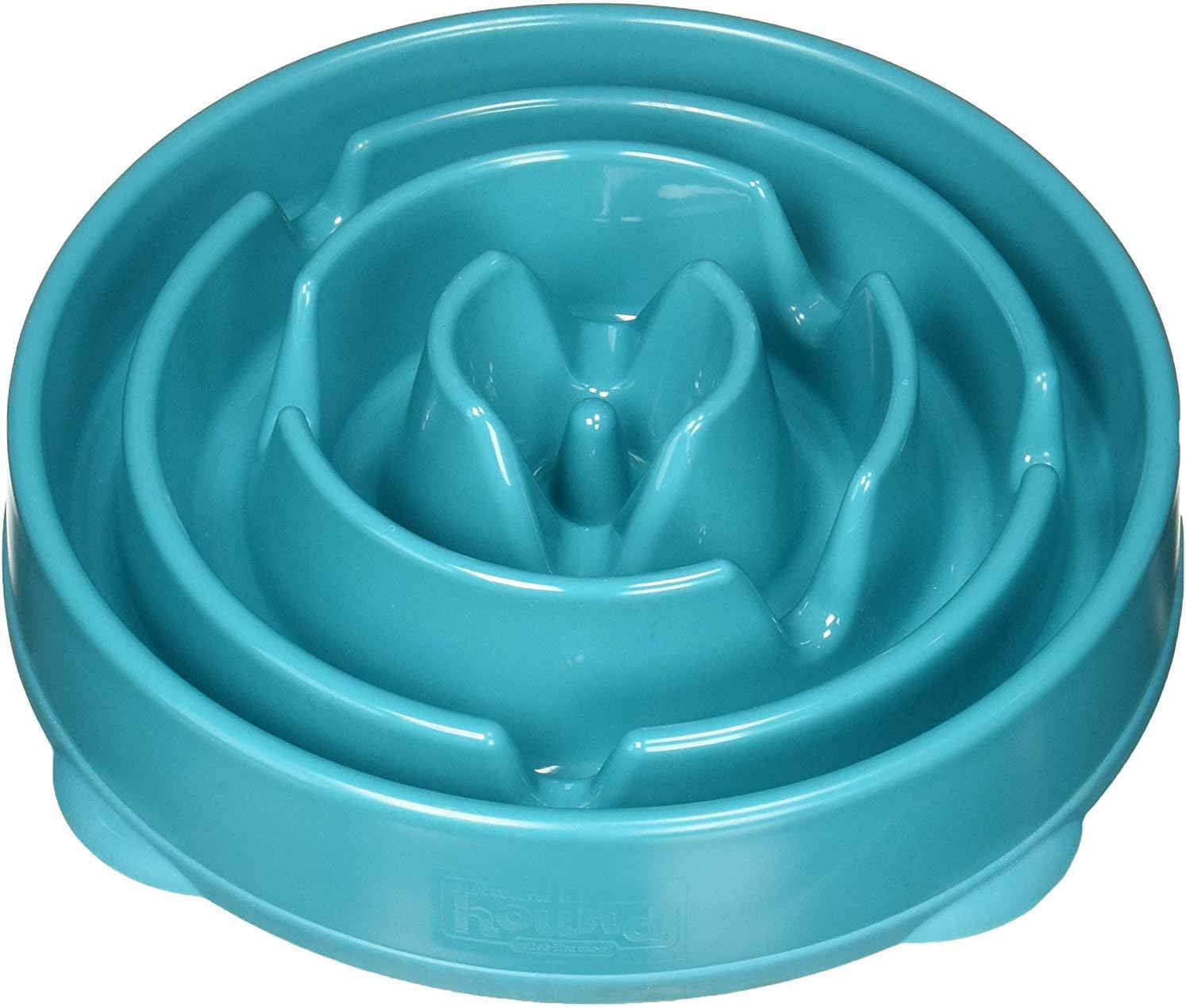
Yes, for most dogs. Slow feeder bowls add physical barriers — ridges, mazes, raised sections — that make food harder to access quickly. The dog has to work around the obstacles, which naturally slows the pace of eating.
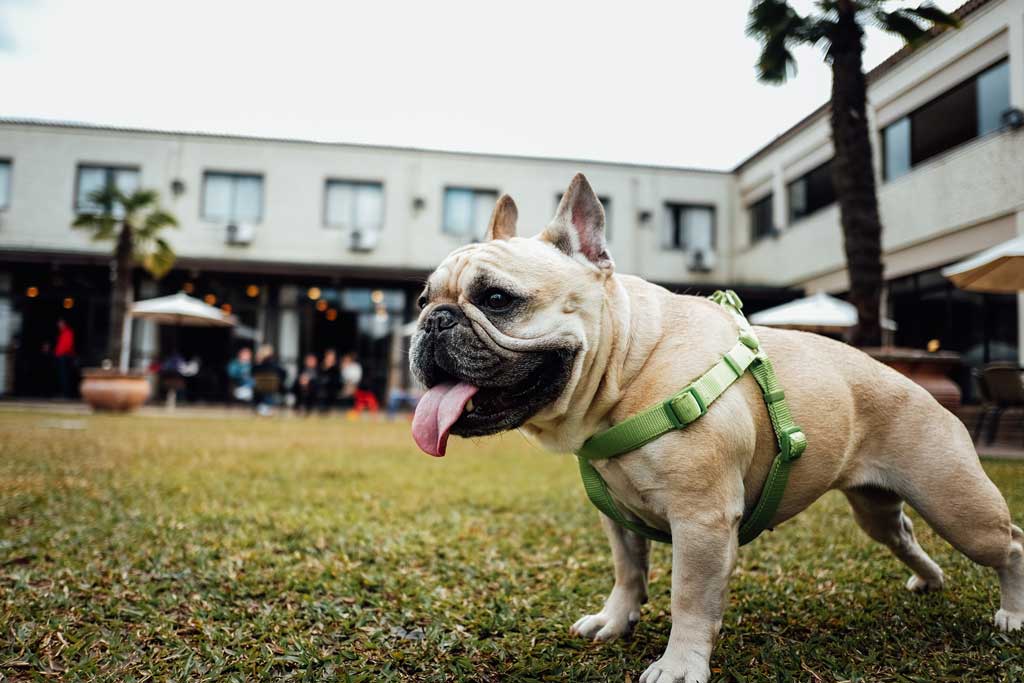
The caveat is that different designs suit different dogs. Flat-faced breeds like Frenchies or Pugs can struggle with designs where the barriers are too high or the gaps too narrow. You may need to try more than one design before finding what works for your dog.
Two Slow Feeder Bowl Picks
🏆 Most Popular
Outward Hound Slow Feeder Bowl
A well-reviewed maze-style slow feeder that works for most breeds and kibble types. The raised ridges create enough of a challenge to meaningfully slow eating without being too frustrating for the dog. Good starting point if you’re trying a slow feeder for the first time.
From $20
BUDGET OPTION
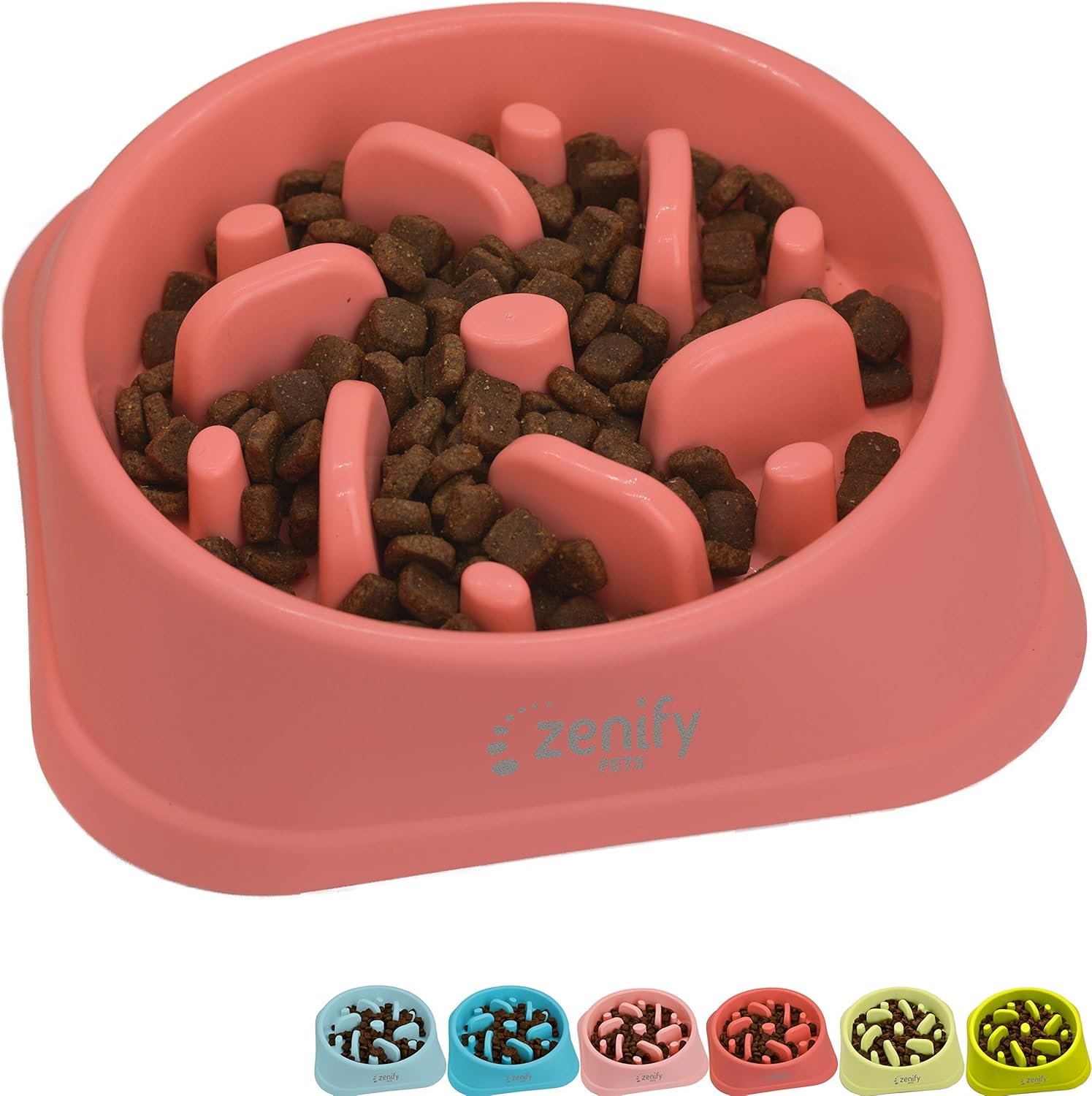
Zenify Slow Feeder Bowl
A more affordable option with a simpler design — fewer obstacles, which suits flat-faced breeds or dogs that find the more complex feeders too challenging. Good second bowl to have alongside a more complex feeder.
From $11.95
Other Ways to Slow Down Eating
A slow feeder bowl is one tool — but enrichment feeding goes further by engaging your dog’s brain at the same time. Research suggests dogs experience positive states when problem-solving, so food toys and enrichment tools aren’t just about slowing the meal down — they actively benefit your dog’s wellbeing.
💡 Enrichment Feeding Alternatives
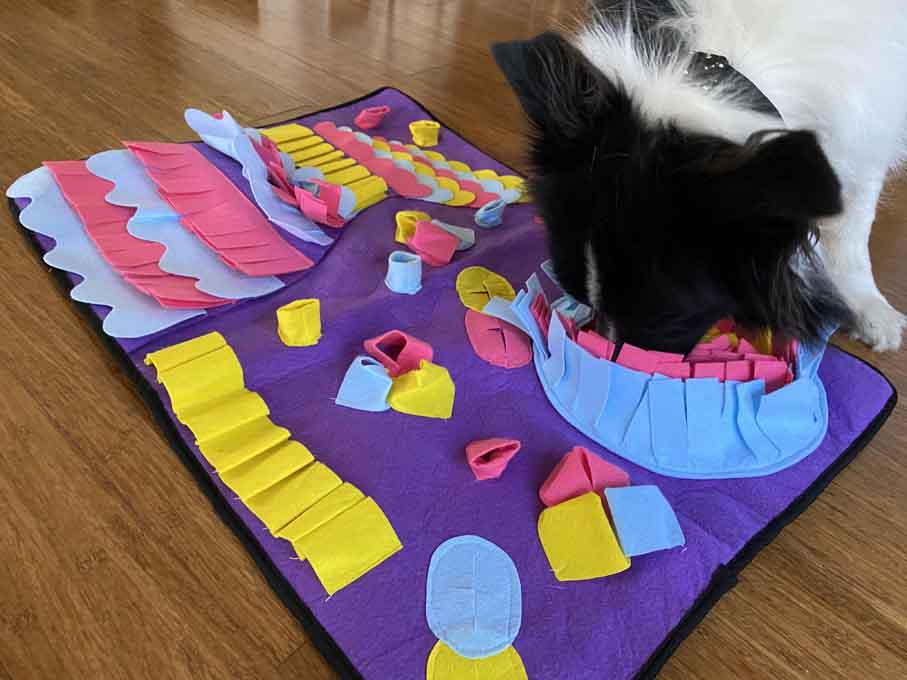
Snuffle Mat
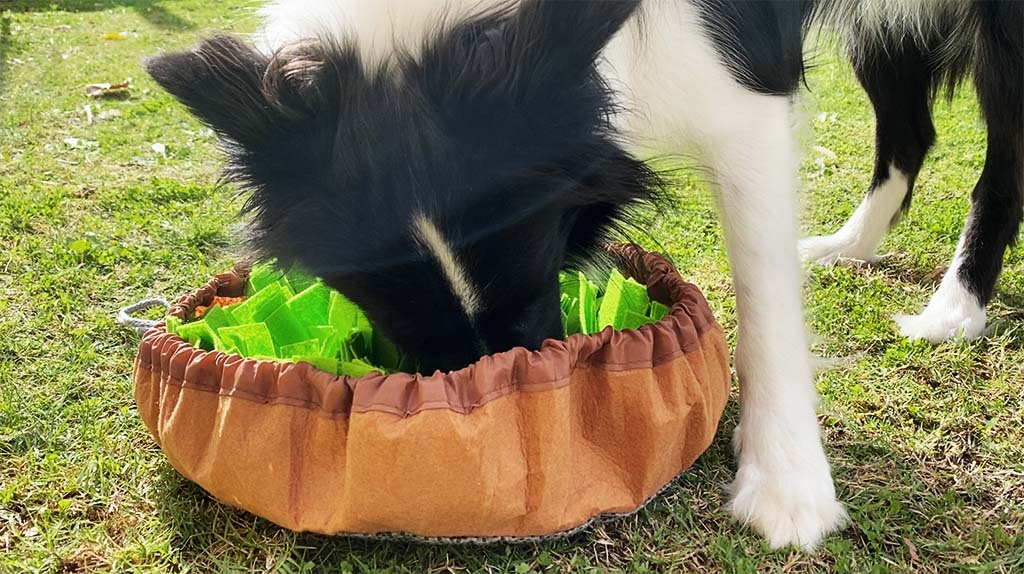
Hide kibble in the fleece fibres of a snuffle mat and let your dog sniff it out. Engages natural foraging instincts, significantly slows eating, and provides genuine mental stimulation. One of the easiest starting points for enrichment feeding.
Kong Wobbler
Fill with kibble and let your dog knock it around to release the food. Works natural instincts and turns the whole meal into an active puzzle. A popular choice for food-motivated dogs that need more of a challenge than a standard slow feeder bowl provides.
Puzzle Ball
A rolling ball that dispenses kibble as your dog pushes it around. Adds a physical element alongside the mental challenge — good for higher-energy dogs. Promotes problem-solving while slowing the pace of eating naturally.
Scatter Hunt
Scatter kibble across a patch of grass or a snuffle mat and let your dog find it. The simplest form of enrichment feeding — no equipment needed beyond the food itself. Works particularly well for dogs whose fast eating stems from boredom rather than instinct.
Quiet, Separate Space
If you have multiple dogs, feed them separately. Removing the competitive dynamic — even when dogs get along well — often slows eating on its own without needing any equipment at all.
Rotate Tools
Keep mealtimes varied — slow feeder bowl one day, interactive food toy the next, scatter hunt the day after. Variety maintains novelty, which keeps the dog engaged rather than figuring out shortcuts through a familiar obstacle.
Frequently Asked Questions
❓ Slow Feeder Dog Bowl FAQ
Can you put wet food in a slow feeder bowl?
Yes — both dry and wet food work in slow feeder bowls. If using wet food, rinse the bowl soon after your dog finishes eating. The ridges and grooves that make the bowl effective also make food residue harder to shift if it dries.
Will a slow feeder help my dog lose weight?
Not directly. A slow feeder slows the pace of eating but doesn’t reduce calorie intake on its own. Weight management depends on total calories consumed and activity level. If you think your dog needs to lose weight, discuss it with your vet before making changes to their diet.
Are slow feeders suitable for flat-faced breeds?
Some designs are better than others. Flat-faced breeds like Frenchies, Pugs, and Bulldogs can struggle with deep ridges or narrow gaps. Look for a design with lower barriers and wider channels — or try a lick mat instead, which works well for these breeds.
My dog figured out how to empty the slow feeder quickly — now what?
Some dogs get very good at defeating a particular feeder design. Try a different bowl with a more complex pattern, or switch to an enrichment tool like a Kong Wobbler or snuffle mat that’s harder to game. Rotating tools regularly also helps prevent this.
Is enrichment feeding better than a slow feeder bowl?
For most dogs, enrichment feeding (snuffle mats, food puzzles, scatter hunts) provides more benefit than a slow feeder bowl alone — it slows eating AND provides mental stimulation at the same time. A slow feeder bowl is a convenient low-effort option for everyday use; enrichment tools are worth incorporating at least a few times a week.