
Disclosure: Dogs of Australia is reader-supported. When you buy through links on our site, we sometimes earn an affiliate commission at no added cost to you. Learn more
For large dogs, harness design matters more than brand. A poorly designed harness — even an expensive one — can restrict shoulder movement, cause rubbing, or actively encourage pulling. Getting the right type for your dog’s body and walking behaviour is the most important decision.
This guide covers the four most useful large dog harness types, what to look for when choosing, and answers to the most common questions about harnesses vs collars and shoulder safety.
What to Look For in a Large Dog Harness
✅ Key Design Principles
Choose a Y-Shaped Chest Plate
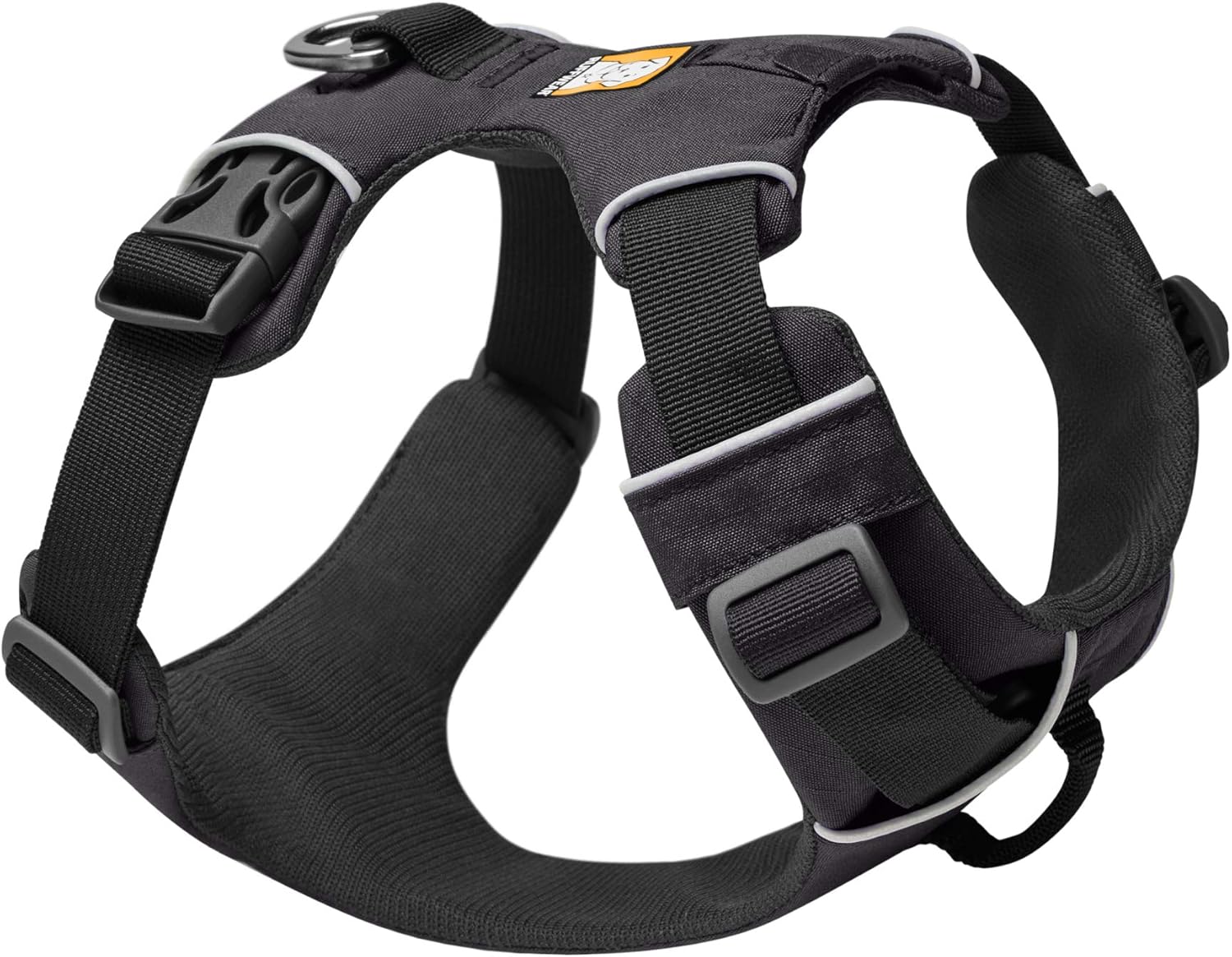
The most important design feature. A Y-shaped front allows your dog’s shoulders to move freely and naturally — straight chest straps that cross the shoulder area restrict movement and can cause long-term discomfort. Look for this shape as a non-negotiable starting point.

Example of a Y-shaped chest plate — Ruffwear Front Range Harness
Other Things That Matter
- Multiple adjustment points — large dogs vary enormously in body shape, even within the same breed
- Breathable, padded material — dogs wearing harnesses for extended periods need comfort, not just security
- At least two leash attachment points (front and back) — useful for different training stages
- Get a professional fitting if you’re unsure about sizing or type — vets and qualified trainers often offer this service
4 Large Dog Harnesses Worth Considering

🏆 Best for Control
Rabbitgoo Tactical Dog Harness
Built for large dogs that need reliable handling in challenging situations. Military-grade materials with a reinforced top handle that lets you grab control quickly — useful on busy streets, around other dogs, or on trail. Multiple MOLLE attachments for accessories.
From $48.99
BEST FOR EVERYDAY USE
Ruffwear Front Range Harness
A well-regarded everyday harness with Y-shaped chest design, foam-padded fit strips, and four adjustment points. Two leash attachment points (front and back), reflective trim for low-light visibility, and available in a range of sizes and colours.
From $86.95

BEST FOR ANXIOUS DOGS
The Perfect Fit Harness
A modular three-piece design that fully opens — no pulling over the head, which makes it ideal for anxious or reactive dogs. Highly adjustable and frequently recommended by vets and trainers. Available via UK import or Australian stockists.
From $105
BEST BUDGET PICK
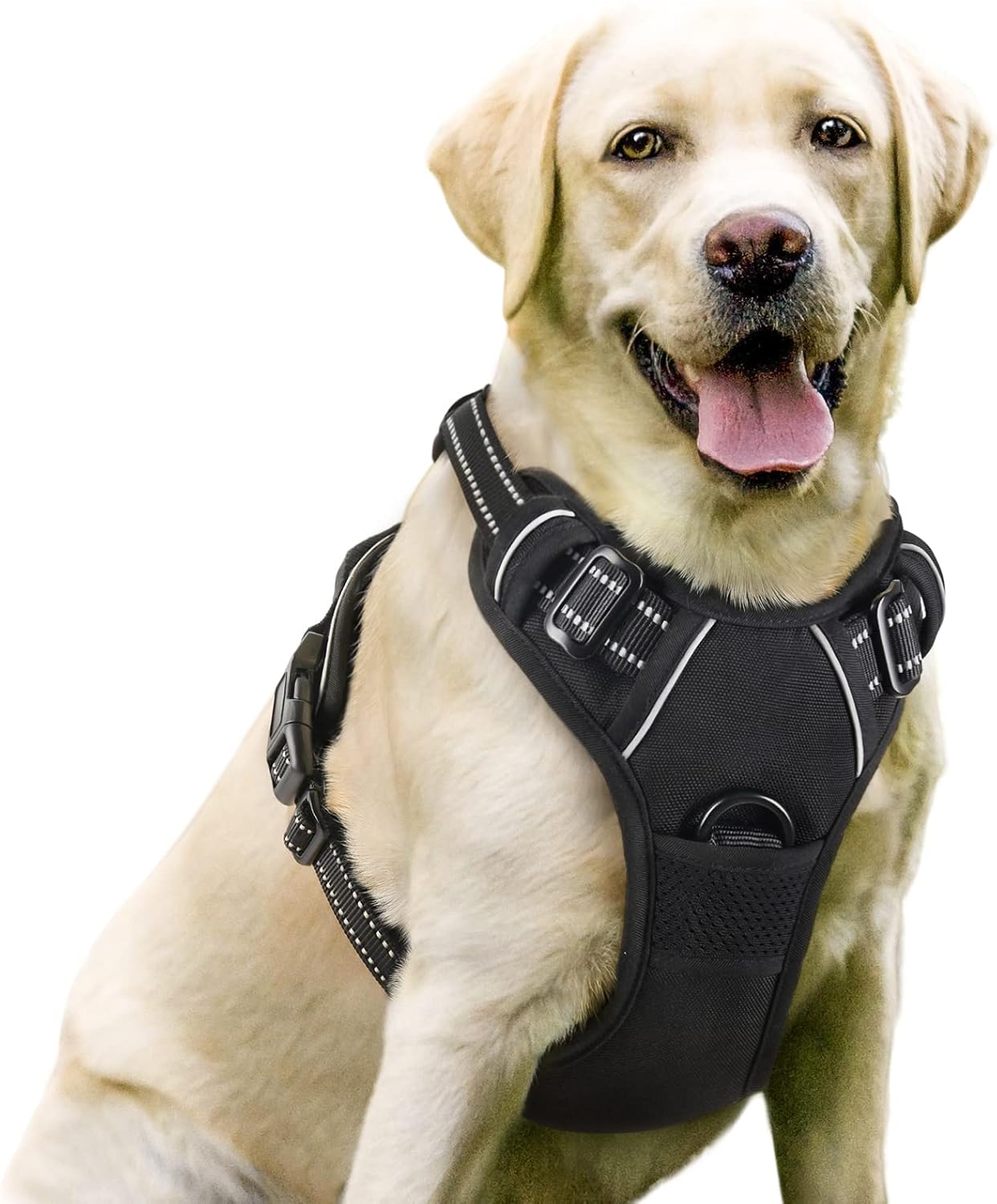
Rabbitgoo No-Pull Harness
A front-attachment harness that gently discourages pulling by redirecting your dog’s attention when they lunge forward. Soft padding and adjustable straps at a very accessible price point — a solid starting point for owners working on leash manners.
From $30.99
Are Harnesses Bad for a Dog’s Shoulders?
⚠️ It Depends on the Design and Fit
A well-fitted Y-shaped harness does not harm a dog’s shoulders. A poorly fitting harness — or one with a straight chest strap that crosses in front of the shoulder joint — can restrict movement and cause long-term discomfort or injury. The design matters more than the brand.
- Always choose a Y-shaped chest plate that sits in the sternum notch between the shoulders, not across them
- Check that your dog can take a full stride without the harness pulling back on the shoulder
- If unsure, ask a vet or qualified trainer to assess the fit — many offer this as part of a consultation
This video illustrates the difference in shoulder movement across different harness designs — worth watching before you buy:
Harness or Collar for Large Dogs?
🆚 Harness vs Collar
When a Harness Is Better
For large dogs that pull, a collar concentrates all the force on the neck — which can cause injury to the trachea, thyroid, and cervical spine over time. A harness distributes that force across a larger area. It also provides better control and a safe grab point in challenging situations.
Use a harness: For walks, training, outdoor activities, and dogs that pull
When a Collar Still Has a Role
A collar is fine for carrying ID tags and for fully leash-trained dogs on low-intensity walks. Most owners use both — a collar always on for ID, a harness for walks. Neither replaces proper leash training.
Use a collar: For ID tags, at home, calm walks with a trained dog
⚠️ A Note on Pulling
A harness does not stop a dog from pulling — it just makes pulling safer. If your large dog pulls consistently, the priority is loose leash training, ideally with a qualified trainer. Dog training is an unregulated industry in Australia — ask your vet for a recommendation rather than relying on search results alone.
Frequently Asked Questions
❓ Large Dog Harness FAQ
What size harness does a large dog need?
Sizing varies significantly by brand — always measure your dog’s girth (the widest point around their chest, just behind the front legs) and cross-reference with the specific brand’s size chart rather than going by breed or weight alone. Large dogs vary enormously in body shape even within the same breed. When between sizes, size up and adjust the straps rather than going smaller.
Should I leave a harness on my dog all the time?
No — harnesses should be put on for walks and activities, then removed at home. Wearing a harness continuously can cause rubbing, skin irritation, and coat matting, particularly around the armpits. Always check the skin under harness contact points regularly for any signs of wear.
How tight should a large dog harness be?
You should be able to slide two fingers flat under any strap — snug enough that the harness can’t slip over the head or shoulders, but not so tight it restricts breathing or movement. After fitting, watch your dog walk a few steps and check that the harness isn’t shifting or restricting the front leg swing.
Which attachment point should I use — front or back?
Back attachment is more comfortable for dogs and works well for leash-trained dogs that don’t pull. Front attachment (on the chest) discourages pulling by redirecting your dog toward you when they lunge forward — useful during training. Many owners use back attachment day-to-day and switch to front attachment during active training sessions. See our full harness guide for more detail.