
Disclosure: Dogs of Australia is reader-supported. When you buy through links on our site, we sometimes earn an affiliate commission at no added cost to you. Learn more
An unsecured dog in a moving car is a distraction risk and a safety hazard — for the dog, for you, and for other road users. In an accident, an unrestrained dog becomes a projectile. Even on a normal drive, a dog moving freely in the car is enough to constitute a distraction offence in most Australian states.
The good news is that the options are practical, affordable, and easy to use. Here’s what you need to know.
The Legal Situation in Australia
⚠️ Rules Vary by State
There is no single national standard for travelling with dogs in vehicles in Australia — rules vary by state and territory. Check with your local road traffic authority for what applies to you.
- Some states have specific requirements about how dogs must be restrained
- Even where no specific restraint law exists (such as Queensland), allowing your dog to distract you while driving is an offence in all states
- Travelling with a dog in your lap or on the passenger seat creates an airbag risk — the same reason children under 12 sit in the back applies to dogs
The practical summary: restrain your dog in the back seat or boot, regardless of what the specific rules in your state say.
Your Restraint Options
🚗 Three Ways to Restrain Your Dog
Seatbelt Tether + Harness
A car-specific seatbelt that clips to a harness worn by the dog. The most common and accessible option — relatively affordable, works in any car, and allows the dog some movement while keeping them secured. Always attach to a harness, never a collar.
Best for: Most dogs, most budgets, most cars
Car Seat / Booster Seat
A raised padded seat that attaches to the car seat and lets the dog look out the window comfortably. Designed for small dogs — provides containment and comfort, usually used with a seatbelt tether. Also protects car upholstery.
Best for: Small dogs on longer trips
Travel Crate
The safest option — particularly a crash-tested crate in the boot. Provides the most protection in an accident and keeps dogs completely contained. Takes up more space and requires a larger vehicle or boot area.
Best for: Maximum safety, larger vehicles, dogs comfortable in crates
Safest Way to Travel With Your Dog
✅ What Actually Matters
- A crash-tested travel crate in the boot is the gold standard for safety — but not practical for every car or budget
- A car harness with a seatbelt tether (attached to the back seat headrest, not a door clip) is a solid and accessible alternative
- Always use the back seat, not the passenger seat — airbag deployment at the front can injure or kill a dog
- A seat cover protects upholstery and gives your dog a non-slip surface, but doesn’t replace a restraint
- Never attach a seatbelt tether to a collar — only to a properly fitting harness
Car Seats and Restraints Worth Buying
🏆 Best Booster Seat
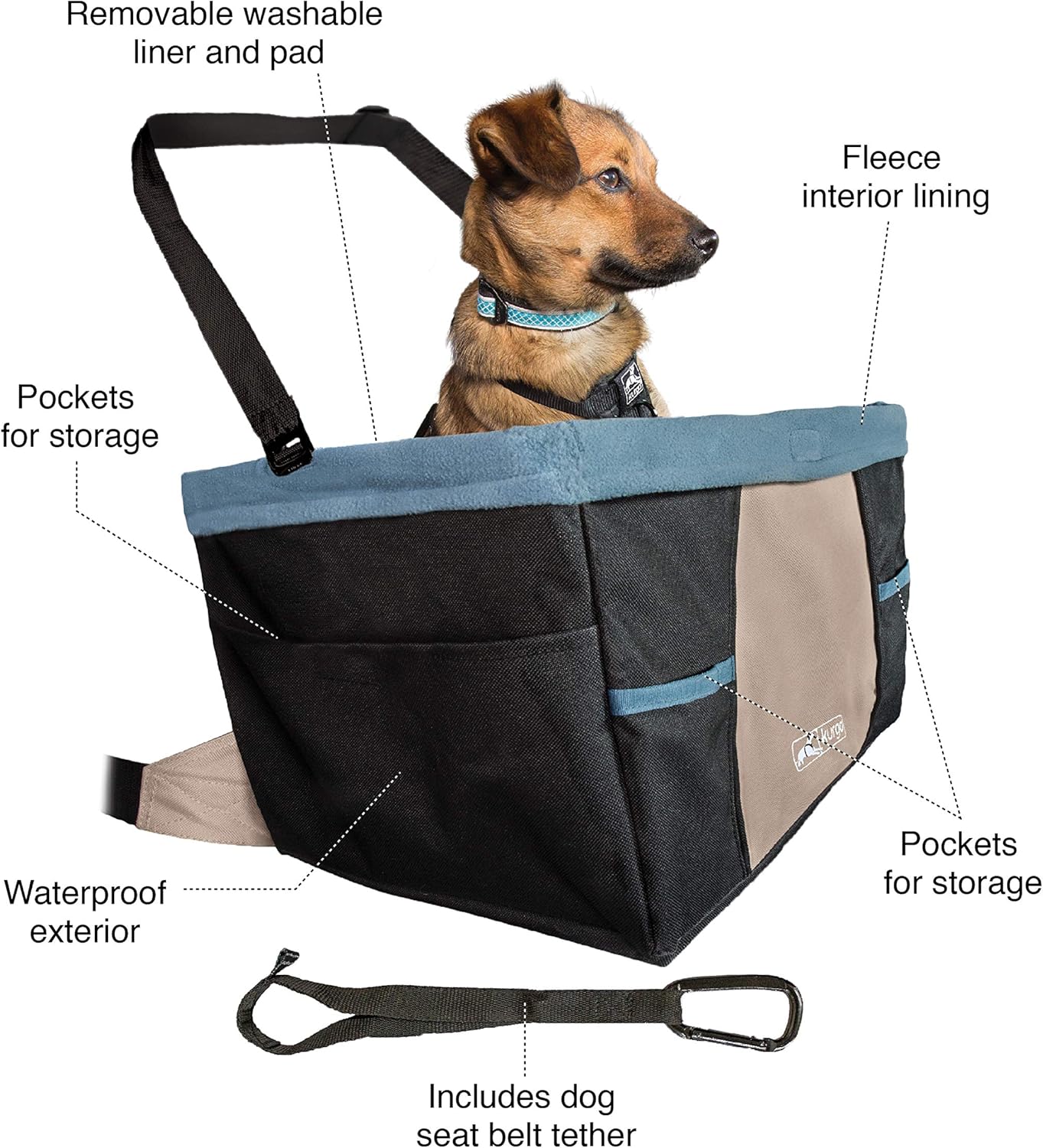
Kurgo Booster Seat
A well-reviewed, award-winning booster seat for small dogs. Metal support structure for integrity, installs quickly on any bucket seat, and collapses flat for storage. Positions small dogs at window height for comfort on longer trips.
- Metal supports for structural integrity
- Installs quickly on any bucket seat
- Collapsible for easy storage
- Available in different colours
From $89.98
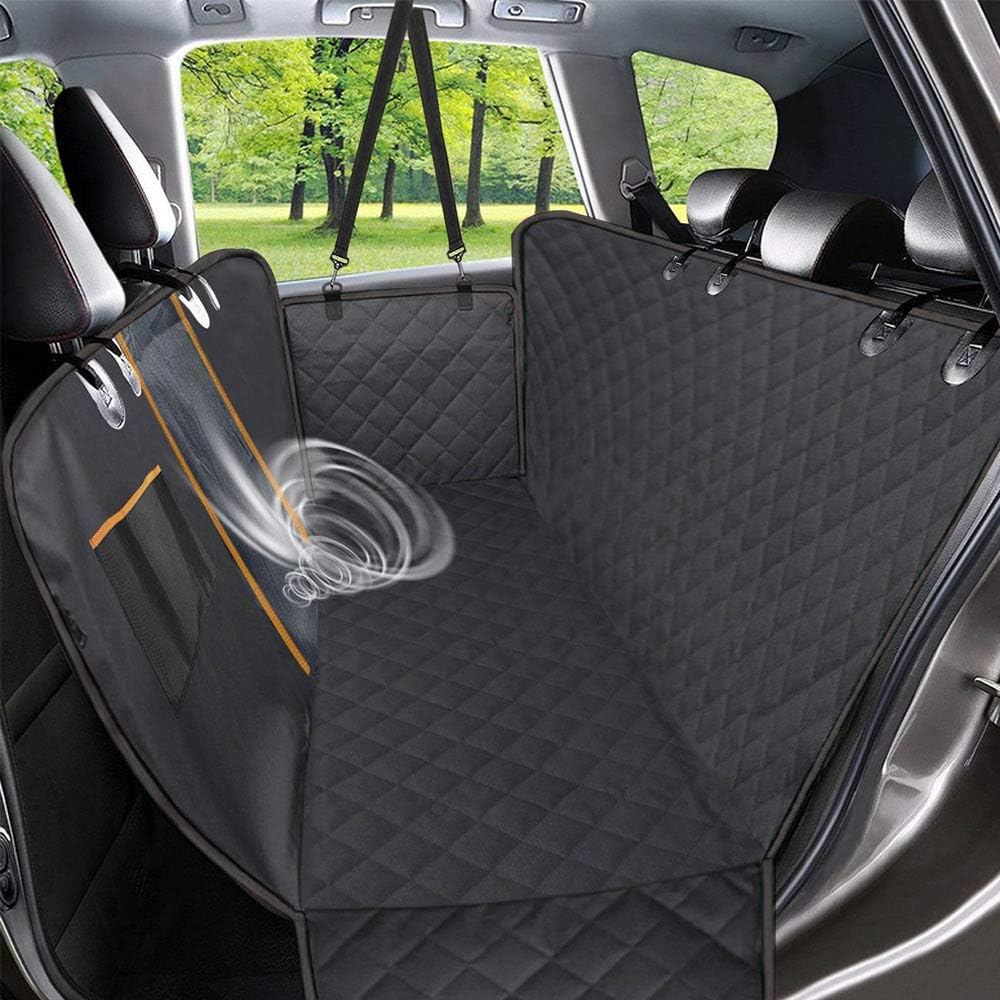
SEAT PROTECTION
Dog Car Seat Cover
Protects back seats from hair, dirt, and slobber. Opens on both sides for easy entry, easy to install and clean. Pairs well with a seatbelt tether for a full setup.
From $41.99

DUAL USE
Multifunctional Booster Seat
Can be used as a car booster seat or a standalone dog bed at home. Portable with easy-grip handles, sized for small dogs to curl up comfortably on longer trips.
From $159.99
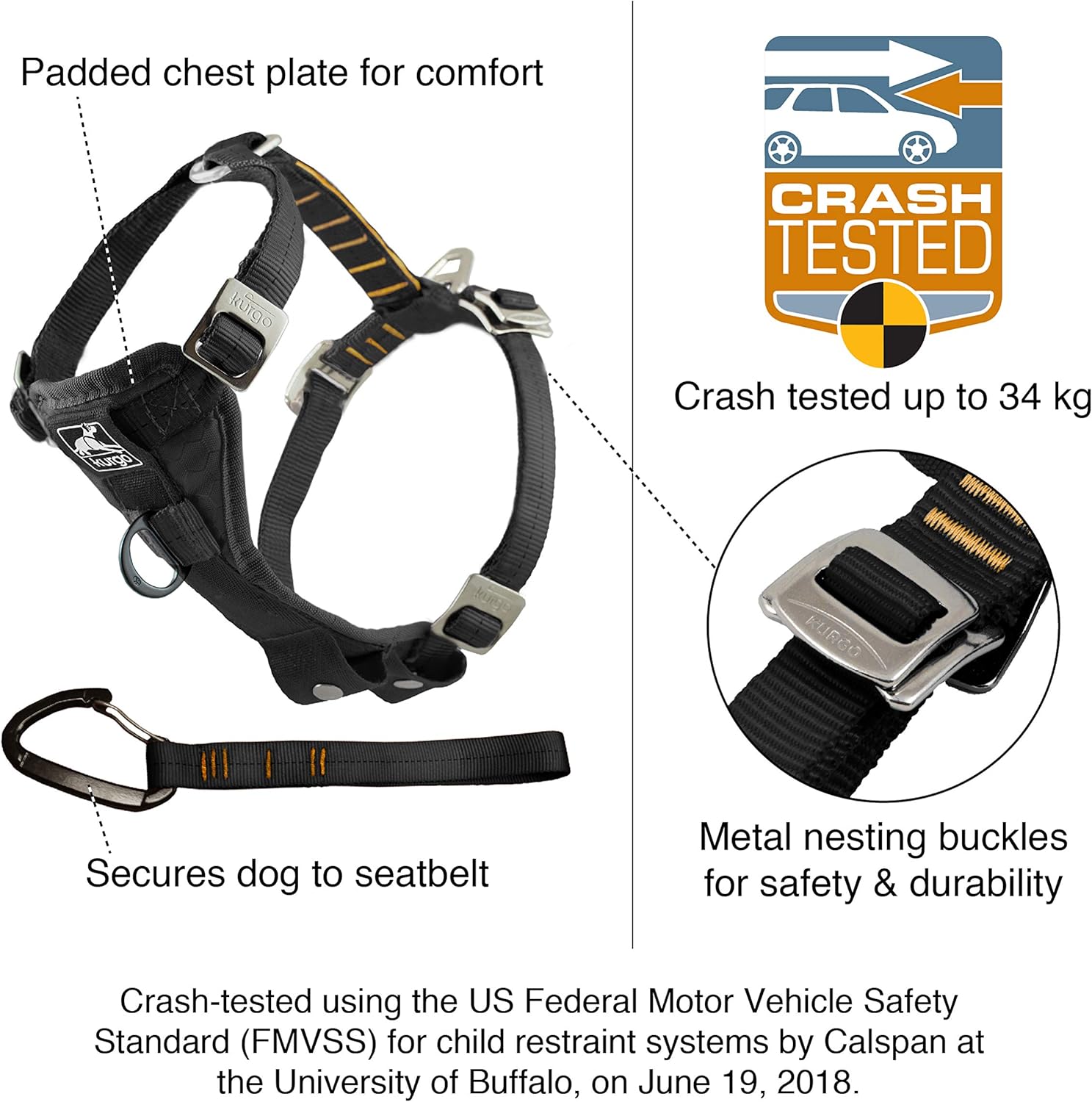
BEST CAR HARNESS
Kurgo Car Harness
Crash-tested at accredited university facilities using the Federal Motor Vehicle Safety Standard for child restraint systems. Works as an everyday harness and a car restraint via the included seatbelt tether. Lifetime warranty.
From $36
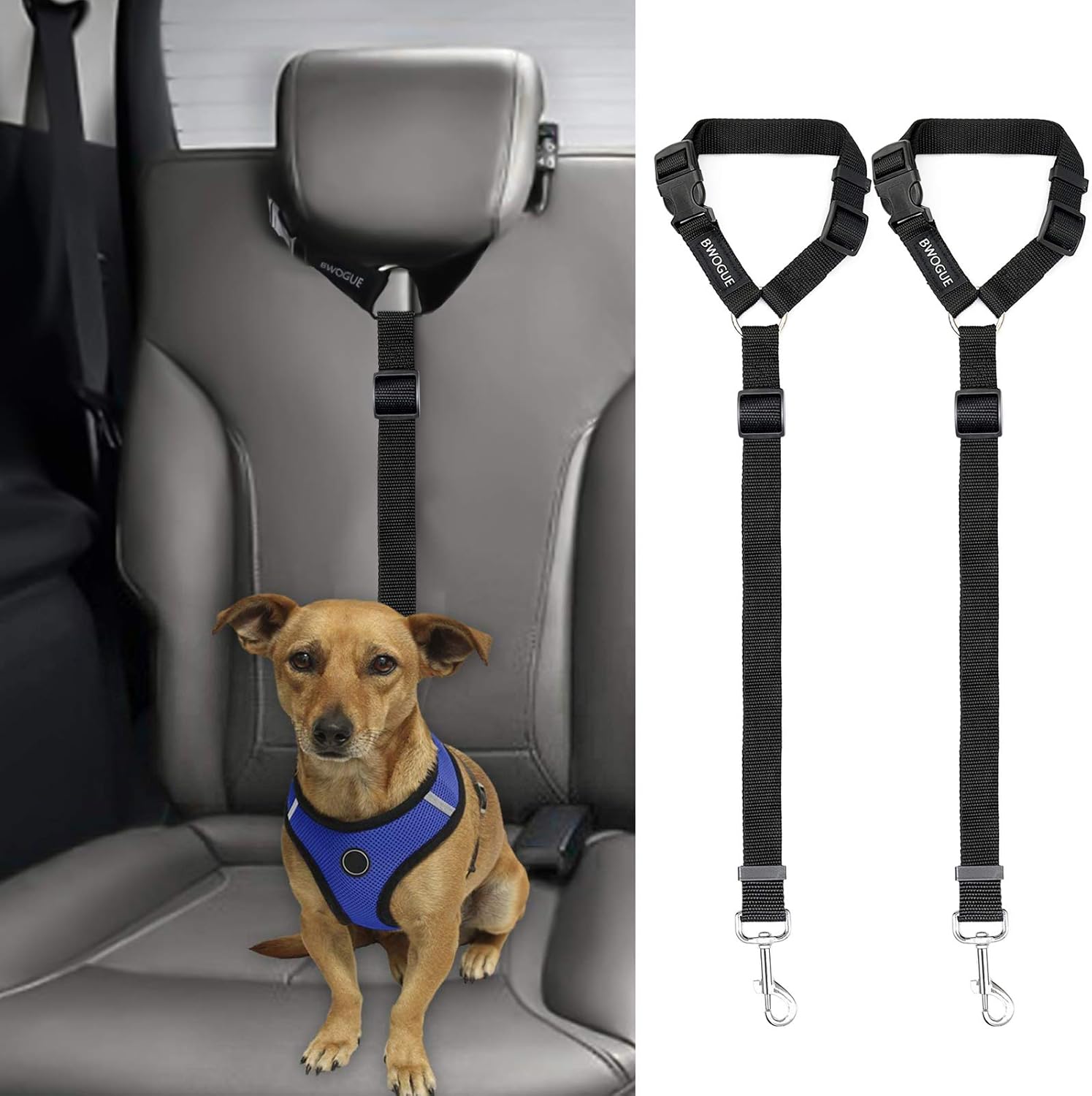
SEATBELT ONLY
Dog Car Seatbelt
Loops over the headrest rather than clipping to the door — prevents your dog accidentally releasing the buckle by stepping on it. Adjustable length, can also be converted to a standard hand-held leash.
From $18.99
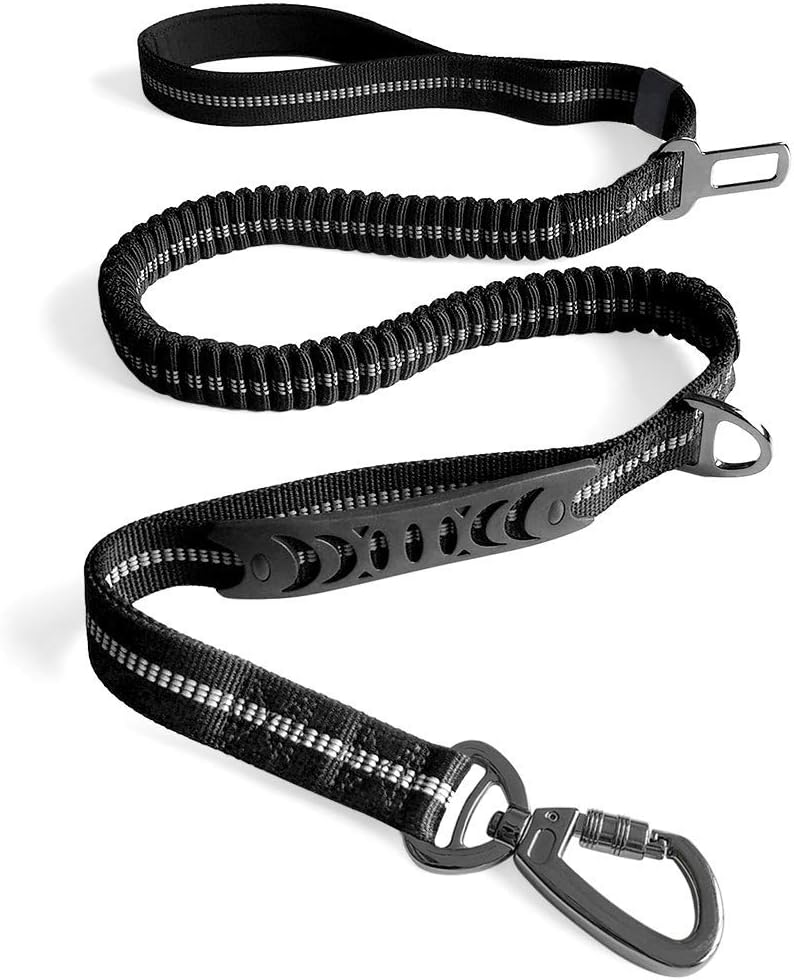
2-IN-1
Car Seatbelt and Leash Combo
Functions as both a car seatbelt tether and a hand-held leash. A practical minimal option if you want one lead that does both jobs.
From $25.99
💡 Booster Seat Checklist
If you use a booster seat, make sure:
- It’s on a back seat — not the passenger seat (airbag risk)
- It’s properly fastened to the car seat
- Your dog is wearing a harness connected to a seatbelt tether while in the seat
- The materials and stitching are solid — a poorly made booster provides no real protection in a sudden stop
Car Crates
If you want the highest level of protection — particularly for dogs that travel in the boot — a crash-tested travel crate is the gold standard. The most reputable option available in Australia is the Variocage: search for your nearest Australian stockist online, or find them on Amazon with free shipping for Prime members.
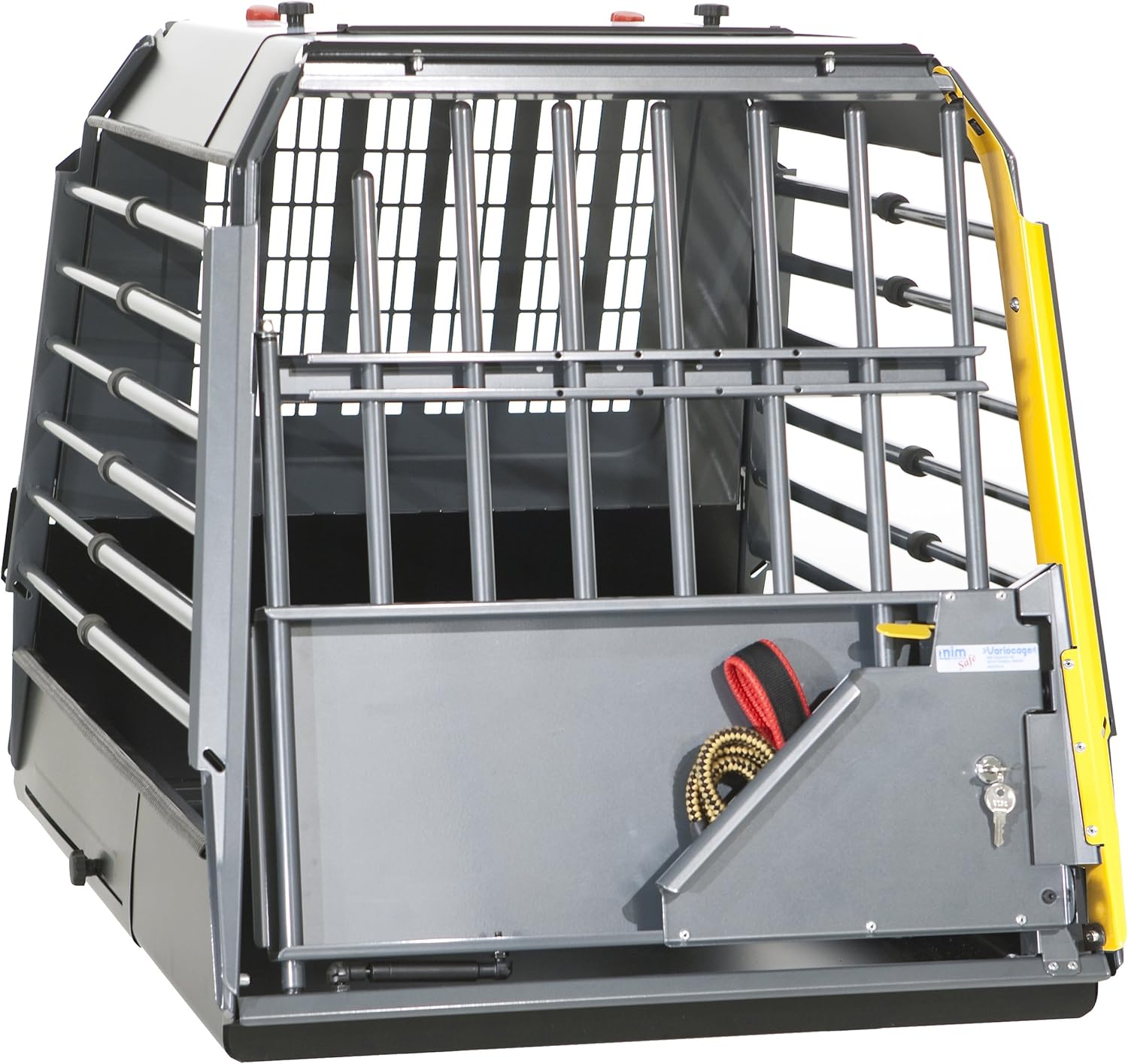
Variocage · Crash-tested travel crate · View on Amazon →
For a more affordable alternative, aluminium dog crates on Amazon or second-hand crates on Gumtree are worth exploring. If your dog travels in the boot and needs to get in and out, see our dog ramp guide for boot ramp options.
Frequently Asked Questions
❓ Dog Car Travel FAQ
What’s the safest place for a dog in a car?
The back seat with a seatbelt tether attached to a harness, or the boot in a properly secured crate. Never the passenger seat — airbag deployment can seriously injure or kill a dog. The same logic applies as to why children under 12 sit in the back.
Can I put a standard seatbelt on my dog?
No — standard seatbelts aren’t designed for dogs. Use a dog-specific car seatbelt that loops over the headrest or through the buckle slot, combined with a properly fitting harness. Never attach any tether to a collar.
What’s the best way to transport a puppy in the car?
A crate or carrier securely fastened in the back seat or boot is the safest option for puppies. Puppies are unpredictable and curious — free access to the car interior creates distraction and safety risks. Getting them comfortable in a crate for car travel early establishes a habit that pays off for years.
My dog gets anxious in the car — what can I do?
Start by talking to your vet — they can assess whether there’s an underlying issue and advise on management options, including medication for severe cases. For mild anxiety, gradual desensitisation (starting with the car stationary, building to short trips) often helps. Some dogs respond well to a covered crate or a familiar-smelling blanket. A qualified trainer or veterinary behaviourist can provide a structured plan if the anxiety is significant.
Are dog booster seats worth it?
For small dogs, yes — a good quality booster seat paired with a seatbelt tether provides comfort on longer trips and keeps your dog contained. The key is quality: a cheaply made booster provides minimal protection in a sudden stop. Always use it with a harness and tether, not as a standalone containment solution.