
Finding a rental that accepts dogs in Australia is genuinely difficult. Many landlords are reluctant — not necessarily because they dislike dogs, but because they’ve had bad experiences, or they’re managing an investment property and don’t want the risk.
A pet resume won’t change a hard no into a yes. But when a landlord is on the fence, or when a listing says “pets on application,” a well-prepared resume and cover letter can shift you ahead of other applicants by showing that you’ve thought about their concerns before they’ve had to raise them.
What Landlords Worry About
Understanding what a landlord is actually worried about helps you address it directly rather than just describing your dog enthusiastically. The most common concerns:
🏠 Common Landlord Concerns
Property Damage
Scratches on doors and floors, soiled carpets, damage to the backyard from digging. This is the primary concern for most landlords — address it by demonstrating your dog’s history in previous rentals, their training level, and your maintenance habits.
Noise
Excessive barking that disturbs neighbours. A reference from a previous neighbour or landlord confirming your dog doesn’t excessively bark when left alone is one of the most powerful things you can include.
Hygiene and Fleas
Concerns about fleas, odour, or general hygiene. Documentation from your vet showing your dog is up to date on flea and parasite prevention, vaccinations, and regular health checks directly addresses this.
Liability
Some landlords worry about dogs and neighbouring tenants or visitors. Mentioning your dog’s temperament, training history, and any obedience qualifications helps reassure them on this front.
What to Include in a Pet Resume
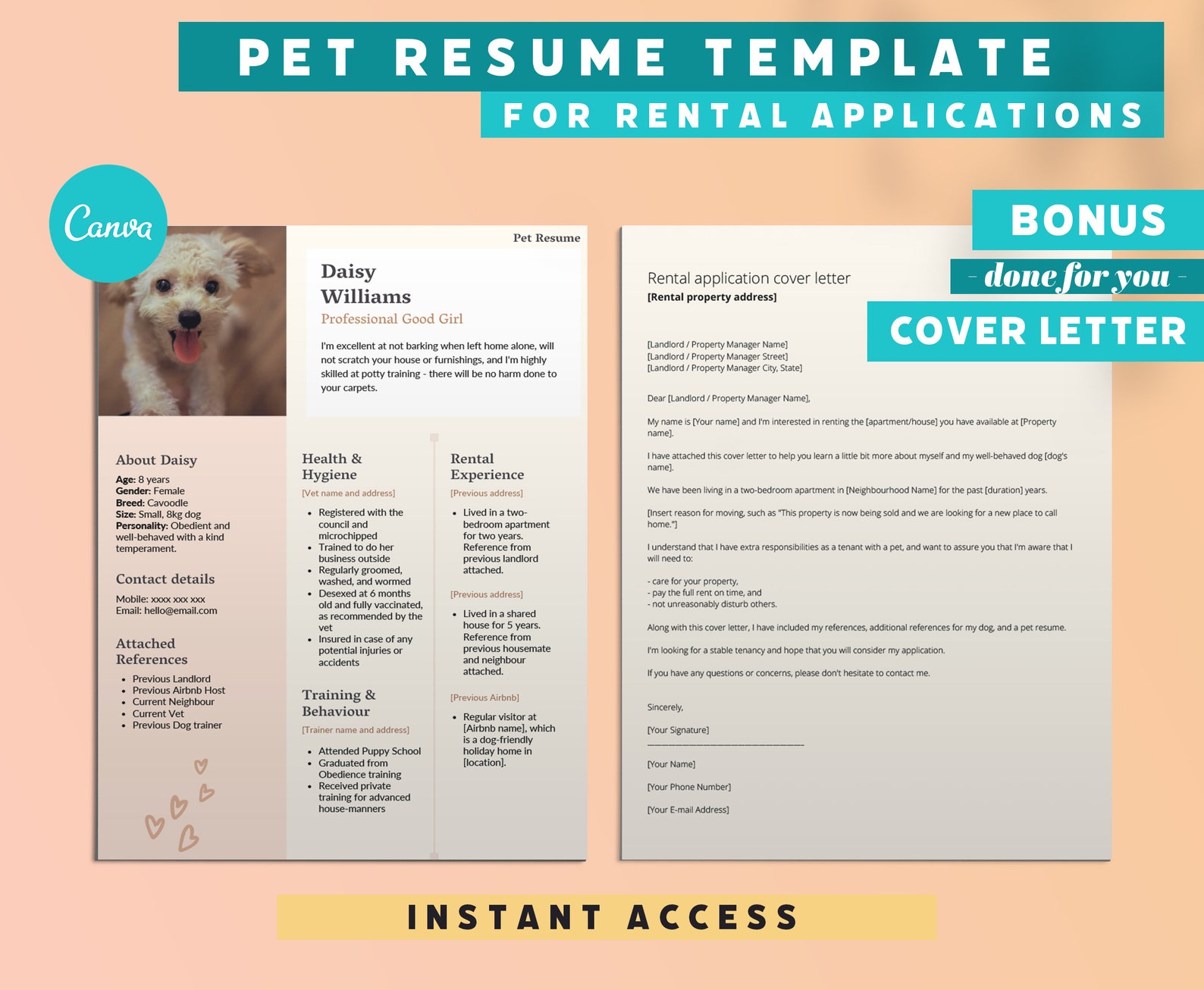
A good pet resume covers four areas: your dog’s basic details, their health and hygiene record, their training history, and references who can vouch for them. Aim to keep the whole document to one page — clear and scannable beats comprehensive and long.
✅ Pet Resume Checklist
Your Dog’s Details
- Name, age, breed, and gender
- Desexed status
- Weight and size (relevant for properties with size restrictions)
- A clear, friendly photo
Health and Hygiene
- Vaccination status (up to date)
- Flea and parasite prevention (regular treatment)
- Microchip number and registration
- Vet contact details
Training and Behaviour
- Puppy school or obedience training completed
- Private training sessions
- Behavioural notes (house-trained, not destructive, doesn’t excessively bark)
- Dog trainer contact if applicable
References
- Previous landlord or property manager
- Neighbour who can speak to barking or behaviour
- Vet
- Dog trainer
Pet References: Who to Ask and What to Say
References are the most convincing part of a pet resume because they come from someone other than you. Aim for at least two — ideally one that speaks to property history and one that speaks to behaviour.
👥 Who Makes a Good Reference
Previous Landlord or Property Manager
The strongest reference you can have. Can confirm no damage to the property and no complaints from neighbours during your tenancy.
Tip: Haven’t rented with your dog before? Book a dog-friendly Airbnb and ask the host for a reference after a successful stay.
Neighbour
Particularly valuable for addressing barking concerns. A neighbour who can confirm your dog doesn’t excessively bark when left alone is directly addressing one of the top landlord worries.
Best for: Noise concerns, general character reference
Vet
Confirms your dog is vaccinated, flea-treated, and that you’re a responsible owner who maintains their pet’s health. A brief letter on clinic letterhead carries weight.
Best for: Health and hygiene concerns
Dog Trainer
Can confirm training history and that your dog is under verbal control. Particularly useful for larger breeds or dogs that landlords might perceive as higher risk.
Best for: Behaviour and liability concerns
What a Reference Letter Looks Like
References don’t need to be long — a short, specific letter is more convincing than a vague one. Here’s an example from a previous landlord:
📄 Example Reference Letter
To whom it may concern,
I gladly write this letter of reference for my previous tenant Mrs Williams and her dog Sunny.
I rented a two-bedroom unit in Townsville to them for two years. During this time I found her to be a responsible tenant and dog owner. I experienced no problems as a result of Sunny living in the property.
Sunny is a friendly dog who did not excessively bark or cause any damage to my property or furnishings. Mrs Williams kept the property clean and tidy throughout, and I have no hesitation in recommending her as a tenant.
If you have any questions, please call me on xxxx xxx xxx.
How to Make A Pet Resume
You can build a pet resume yourself in Word or Google Docs — a clean, readable layout with a good photo of your dog is all you need. If you’d rather start from a polished template, Etsy has several Australian-relevant options that save time and look more professional than a DIY version.
Ready-Made Pet Resume Templates You Can Buy
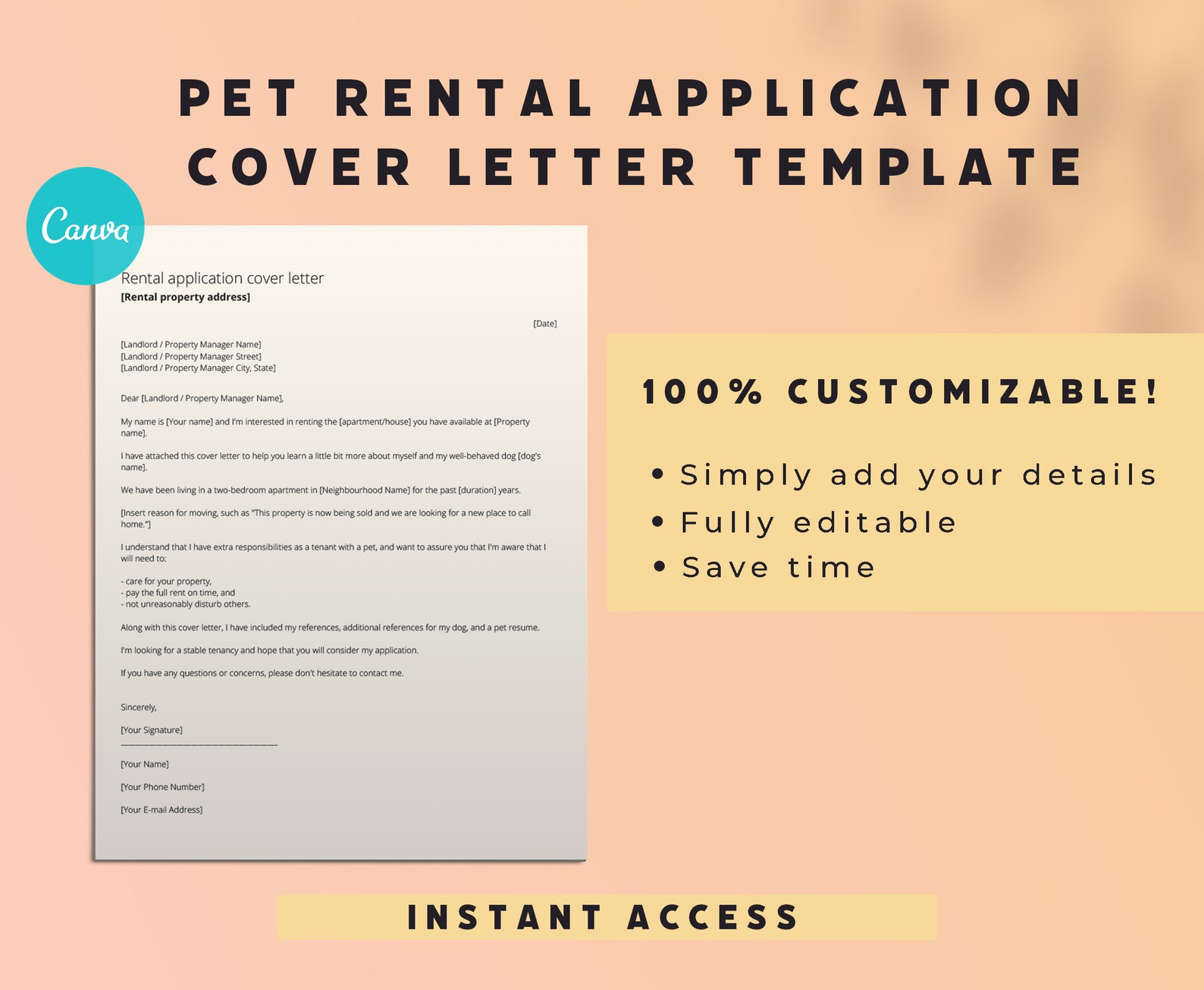
Etsy has ready-made pet resume templates that save time and look more polished than a DIY Word document. Both links below go to the same seller — the resume and cover letter are designed to work together.
View templates on Etsy — from $15.45 →
Frequently Asked Questions
❓ Pet Resume FAQ
What does “pets on application” mean on a rental listing?
It means the landlord is willing to consider tenants with pets but hasn’t committed to accepting them. It’s not a yes — it’s an opening. This is where a well-prepared pet resume and cover letter makes the most difference, turning an uncertain situation into a competitive advantage.
Do I need a pet resume if I’ve never rented with my dog before?
Yes — and this is exactly when a resume helps most. Without a rental history with your dog, you need other references to fill the gap. Your vet, a neighbour, a dog trainer, or even a host from a dog-friendly Airbnb stay can all provide useful references.
Can a landlord legally refuse pets in Australia?
Tenancy laws around pets vary by state. Victoria and the ACT have stronger protections for pet-owning tenants; other states give landlords more discretion. Check your state’s current tenancy laws for the specific rules that apply to you — this is an area that has been changing in recent years.
How long should a pet resume be?
One page is ideal. Landlords are busy — a concise, well-organised resume with a good photo is more effective than a lengthy document. Cover the key sections (dog details, health, training, references) and let the references do the convincing.