
Disclosure: Dogs of Australia is reader-supported. When you buy through links on our site, we sometimes earn an affiliate commission at no added cost to you. Learn more
A puppy pen is one of the most useful things you can set up before bringing a new puppy home. It gives your puppy a safe, contained space when you can’t actively supervise them — which during the first few weeks is most of the time. It also makes toilet training significantly easier and prevents the kind of chewing disasters that are almost inevitable when an unsupervised puppy has free run of the house.
Why a Puppy Pen Is Worth It
🐾 What a Puppy Play Pen Prevents
Injuries and Hazards
Puppies investigate everything with their mouths and have no sense of what’s dangerous. Power cords, toxic plants, small objects, stairs — a pen keeps them away from household hazards when you’re occupied or not in the room.
Toilet Accidents
A contained space makes toilet training much more manageable — you can set up a designated toilet area within the pen using puppy pads or a grass toilet, and your puppy learns where to go rather than treating the whole house as fair game.
Destructive Chewing
Puppies chew. It’s developmental and largely unavoidable. A pen limits chewing to what’s inside it — appropriate toys and chews — rather than furniture, shoes, or skirting boards. Provide plenty of safe chew options and rotate them to keep things interesting.
Overwhelm From Children or Other Pets
Puppies need a lot of sleep — up to 16–18 hours a day. A pen gives them a space where they can rest without being pestered by excited children or other household pets. This is genuinely important for healthy development and temperament.
The Three Types of Puppy Pen
Three main styles — each suits different needs and budgets.
🏆 Most Popular
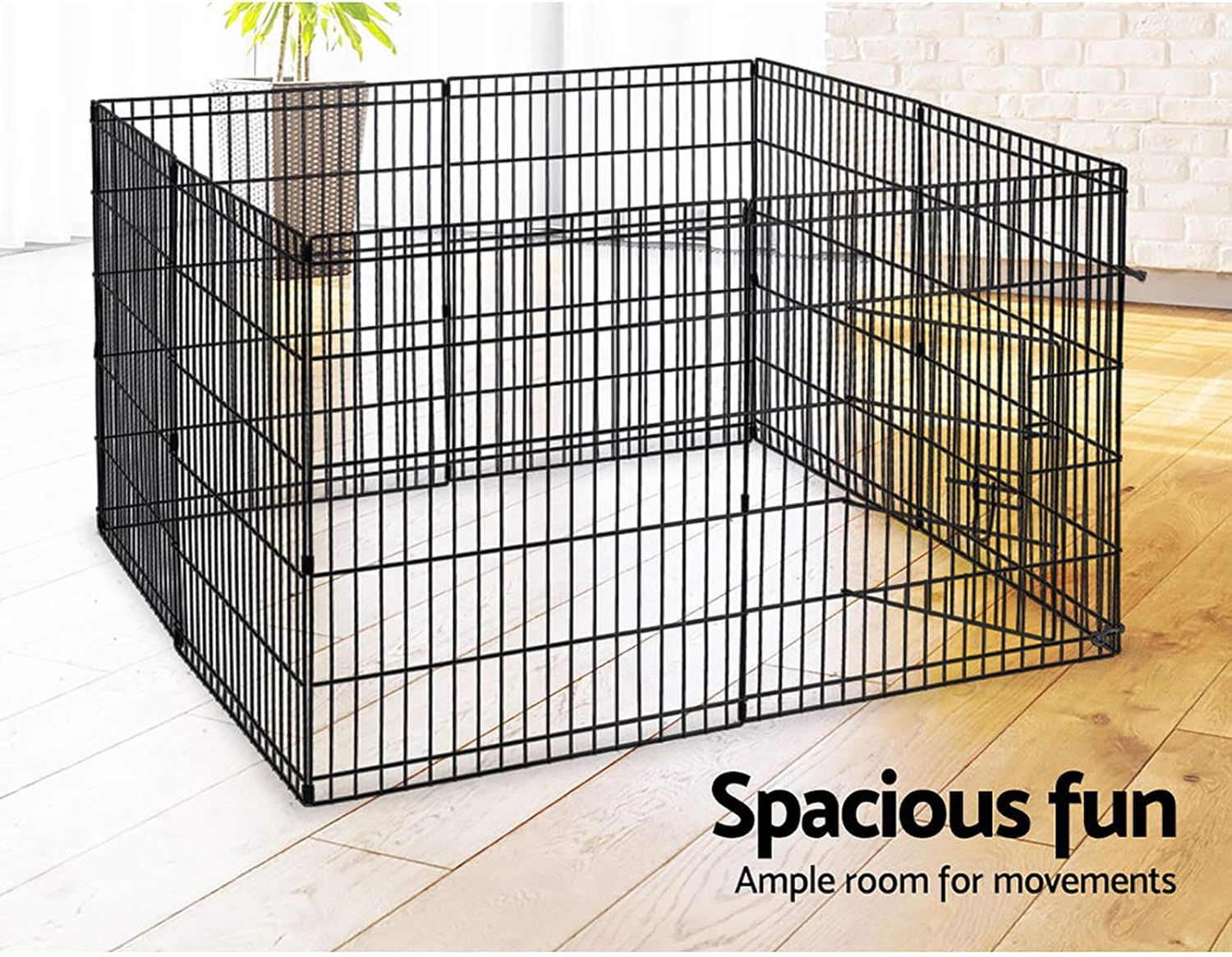
Standard Wire Puppy Pen
The most common choice — rust-resistant powder-coated steel panels that can be configured to suit different room shapes and sizes. Sturdy, easy to clean, and durable enough to last through the puppy phase and beyond. Available in a range of sizes to suit different breeds.
- Configurable to fit different spaces
- Rust-resistant powder-coated steel
- Available in multiple sizes
- Easy to wipe clean
From $62.95
BEST FOR TRAVEL
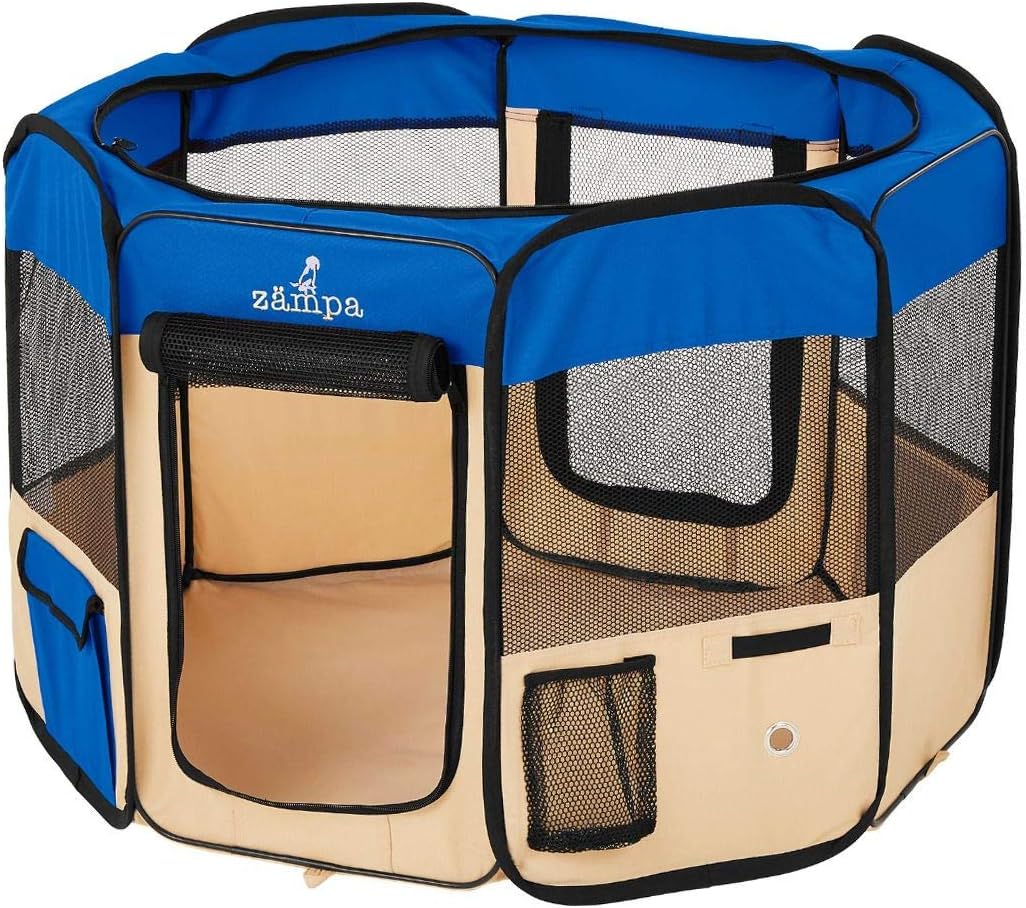
Soft Fabric Puppy Pen
Pops up in seconds with no assembly required — folds flat for storage or travel. Made from durable water-resistant fabric with a closable top for escape-artist puppies. Not as heavy-duty as wire but much more portable. Available in multiple sizes and colours.
From $89.35
BEST FOR AESTHETICS
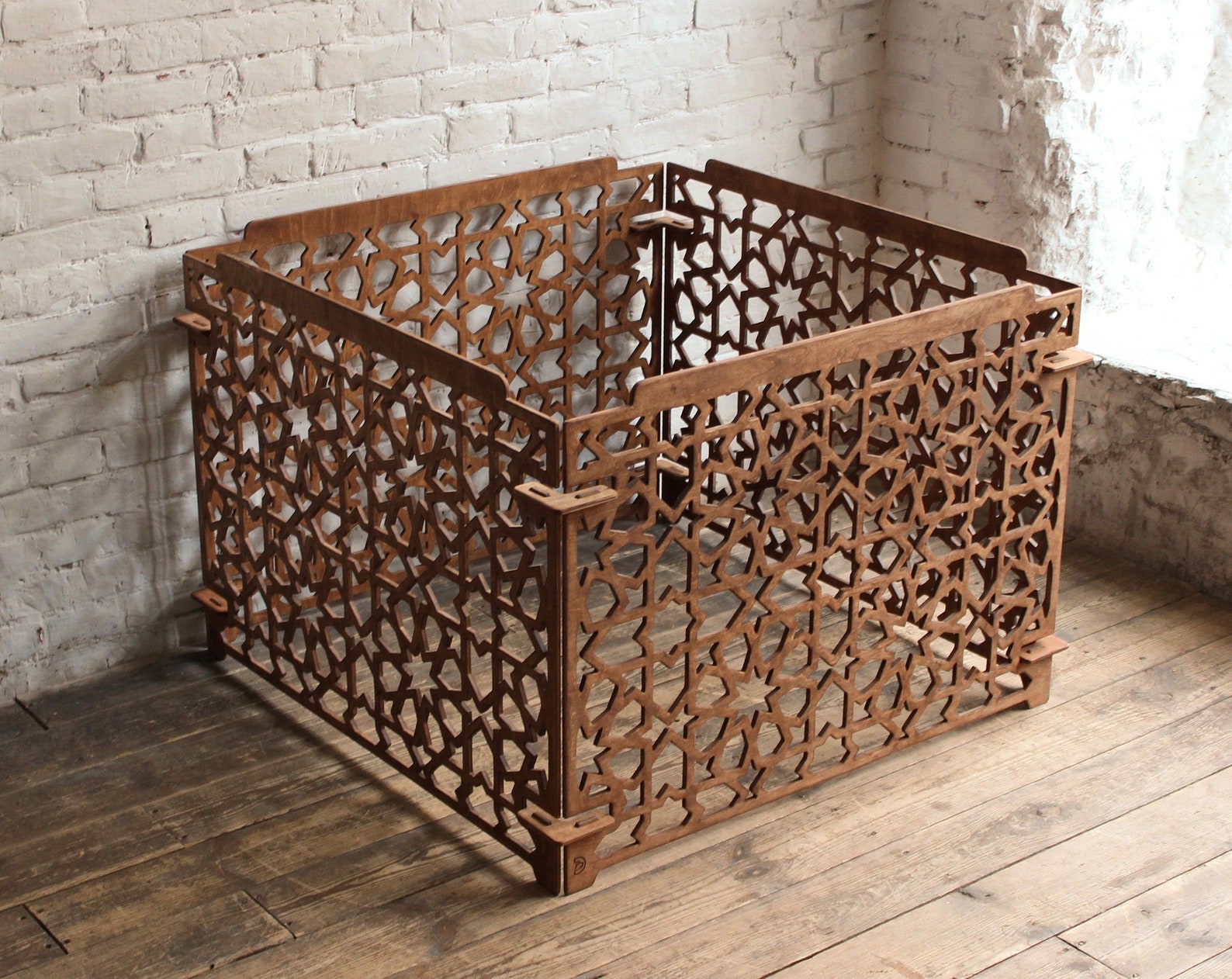
Designer Puppy Pen
A handmade wooden designer pen for owners who want something that actually looks good in their home. Available in different sizes and colours. Ships from Ukraine — factor in delivery time and cost before ordering.
From $563
Pen vs Crate: Do You Need Both?
🆚 Pen or Crate?
Puppy Pen
More space — enough room for a toilet area, sleeping area, water bowl, and toys. Better for longer unsupervised periods. Less useful for overnight sleeping and crate training.
Best for: Daytime containment, toilet training setup, longer periods alone
Crate
Smaller and more den-like — better for overnight sleeping and building the association between the crate and calm rest. Many dogs feel more secure in a smaller, enclosed space.
Best for: Overnight sleeping, travel, building a calm rest space
Many owners use both — the crate sits inside the pen, giving the puppy a cosy sleeping space within a larger contained area. This setup also allows room for a separate toilet area alongside the sleeping and play zones.
What to Put Inside the Pen
✅ Setting Up the Pen
Toilet Area
Set up one corner as a dedicated toilet zone. Options include disposable puppy pads, reusable washable pads, or a grass toilet. Keep it away from the sleeping and eating areas — puppies naturally avoid toileting where they sleep and eat, which you can use to your advantage.
Eating and Drinking Area
A water bowl that clips to the pen side is useful — it prevents tipping and keeps the water cleaner. For food, a slow feeder or a standard stainless steel bowl both work well. Keep this area separate from the toilet corner.
Sleeping Area
A crate or a simple dog bed gives your puppy a defined sleeping spot. Don’t buy an expensive bed immediately — many puppies chew their first few beds. Start with something basic and upgrade once the chewing phase has passed.
Play Area and Toys
Keep toys age-appropriate and safe for puppies. Chew toys are particularly useful during the teething phase — rubber chew toys and rope toys are solid choices. A stuffed Kong gives a puppy something to work on during quiet time. Always supervise initially with any new toy, and remove anything that starts to break apart.
Puppy Pee Pads
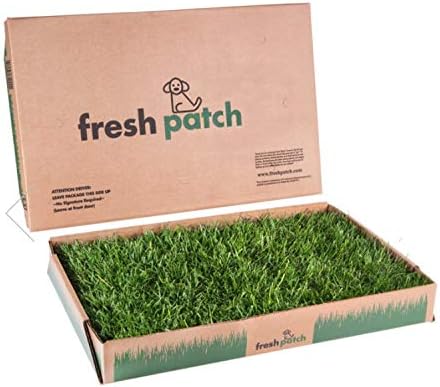
Fresh Patch’s real grass pee pads are popular with Australian puppy owners — they use the scent of real grass to encourage puppies to use the right spot, which can speed up the transition to going outside.
REAL GRASS PAD
Fresh Patch Grass Pee Pad
Real hydroponically grown grass — disposable, no artificial chemicals. The natural scent encourages puppies to use it instinctively. Available in multiple sizes.
From $39
For a full comparison of all puppy pad types — real grass, artificial grass, reusable, and disposable — see our complete puppy pads guide.
Puppy Chew Toys
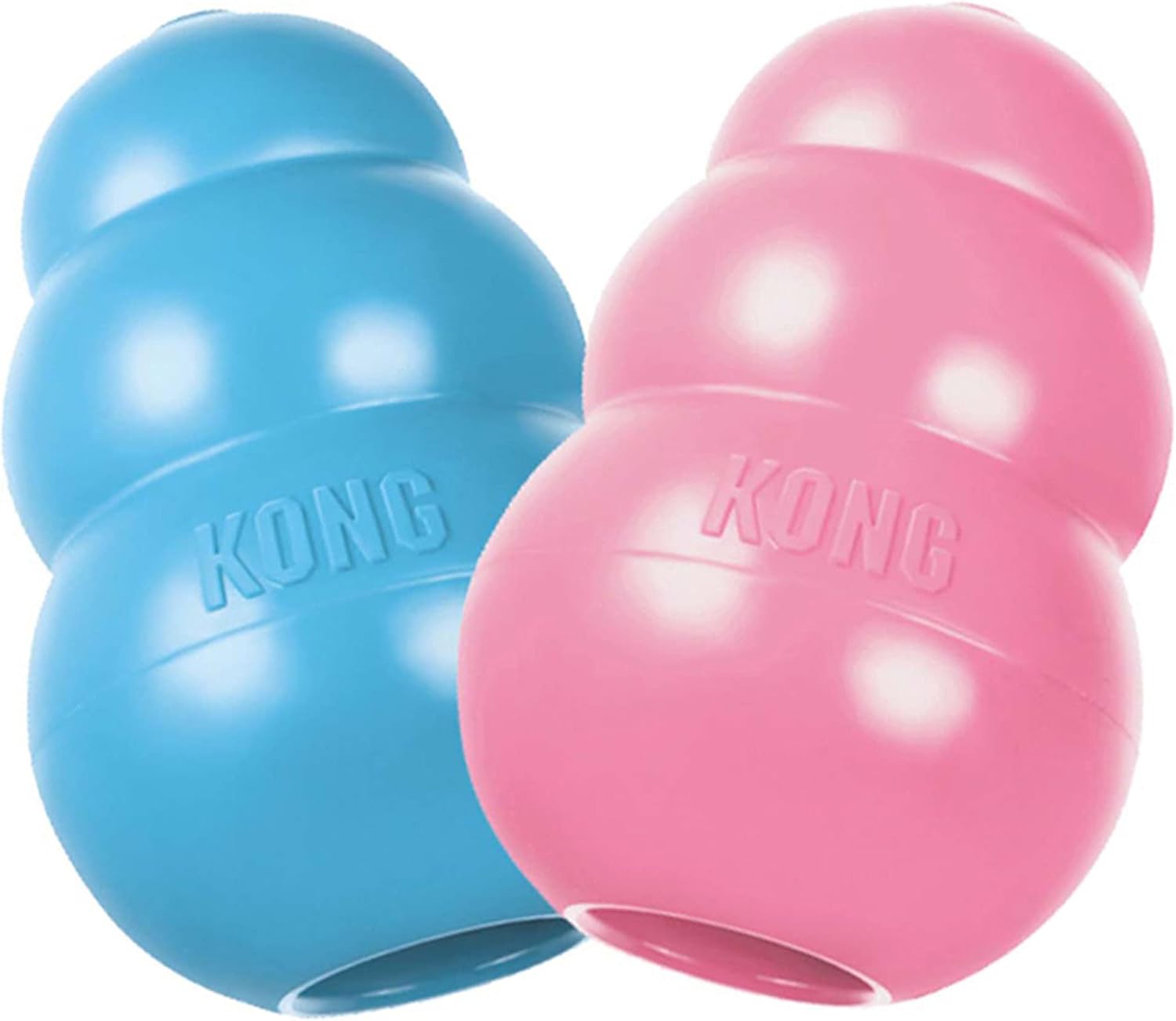
Kong’s puppy range is specifically formulated for developing teeth — softer rubber than their adult toys, and sized for smaller mouths. Stuff with a little peanut butter or wet food and freeze for a longer-lasting challenge.
CLASSIC CHEW TOY
Kong Puppy
The go-to rubber chew toy for puppies — durable, stuffable, and available in sizes to suit all breeds. Keeps puppies occupied and redirects chewing to something appropriate.
From $14.79
Puppy Beds
Don’t overspend on a first bed — there’s a reasonable chance your puppy will chew it. Start simple and upgrade once the teething phase is behind you. Our bed guides cover every style and price point:
- 5+ Types of Dog Beds: Which One Is Right for You?
- Dog Cave Beds
- Pink Dog Beds
- Wooden Dog Beds
- Luxury Dog Beds
Frequently Asked Questions
❓ Puppy Pen FAQ
How long can a puppy be left in a pen?
Young puppies need to toilet frequently — roughly one hour per month of age, plus one. So an 8-week-old puppy generally needs a toilet opportunity every 2–3 hours. A pen with a designated toilet area extends how long they can be safely left, but puppies still need regular interaction, feeding, and exercise throughout the day.
What size pen do I need?
Big enough to fit separate toilet, sleeping, and play zones — but not so large that your puppy can wander far from the toilet area and forget it’s there. For most breeds, a pen of around 1.5–2m per side gives adequate room. If you’re buying for a large breed, size up — they grow fast.
Where can I buy a puppy pen second-hand?
Gumtree and Facebook Marketplace are worth checking — puppy gear turns over quickly as dogs grow out of it. You can often find barely-used wire pens at significant discounts. Inspect the latches and connections before buying to make sure everything is secure.
When can I stop using the puppy pen?
When your dog is reliably toilet trained, no longer destructively chewing unsupervised, and can be trusted to settle calmly without constant monitoring. For most dogs this is somewhere between 6 months and 2 years depending on breed and individual temperament — adolescence can extend the pen’s usefulness well past the puppy stage.